3D map the Northern Area of the Ballantrae Ophiolite Complex
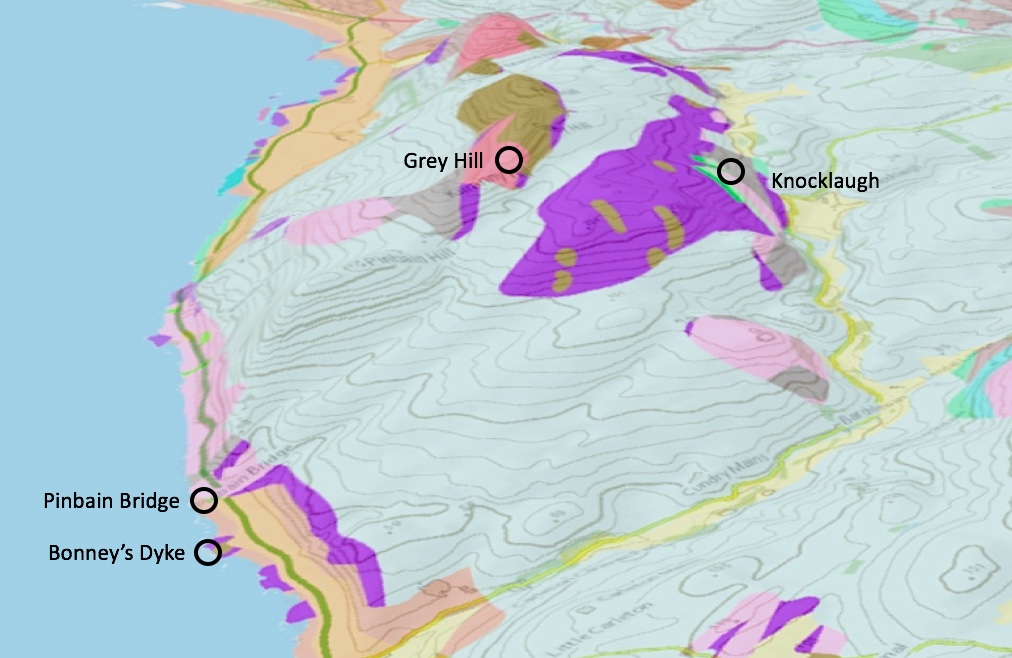
The metamorphic sole at Knocklaugh
The rock types
The garnet metapyroxenite is a dark-grey rock bearing both hornblende and garnet. It occurs in the aureole-serpentinite contact zone sometimes in direct contact with the amphibolite, sometimes separated from it by slivers of serpentinite.There is some debate whether these represent slices resulting from imbrication due to the friction between the upthrusting serpentinite and the metamorphic rock or whether the garnet metapyroxenite formed in the original ultrabasic source rock prior to serpentinisation.
The amphibolite is also dark-grey and is reported to be composed largely of plagioclase and green or brown hornblende. With increased foliation it is more likely to be garnet bearing and when very close to contact with the serpentinite, pyroxene. In thin section, the amphibole in our sample is clear with no obvious plagioclase present.
The epidote schist is finer-grained and slate-like with dark green layers of chlorite, hornblende, actinolite and albite around small epidote augen and boudins. In places there may be lighter yellow-green layers of fine-grained epidote and titanite and in others, quartz-albite-epidote-muscovite-chlorite schists and small pods of recrystallised carbonate.
The olstostrome lying below the ophiolite’s metamorphic ‘sole’ contains thin, graded beds of lithic-arenite (sandstone with at least 25% of small rock fragments that here tend to be volcanic in origin) as well as large boulders of other sedimentary, basic and ultra-basic rocks.
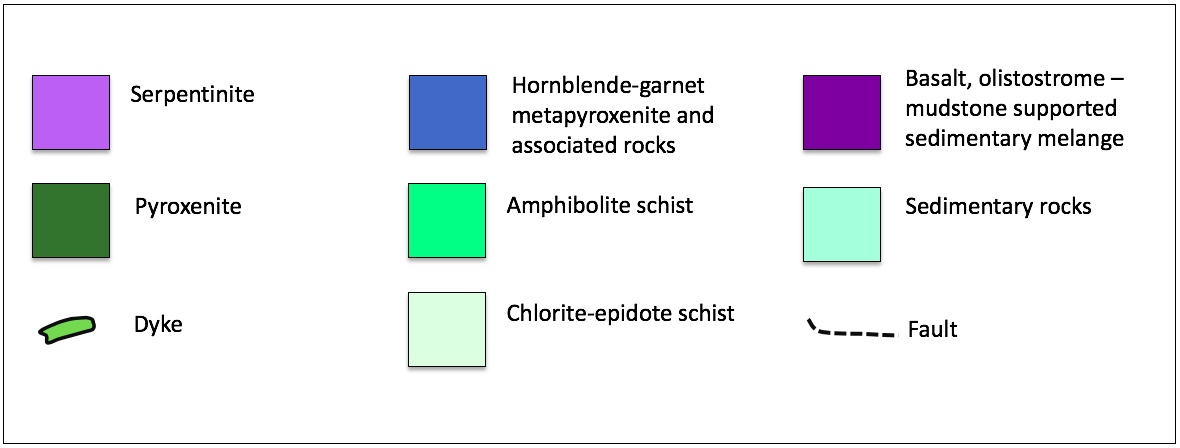
Map and key for the metamorphic aureole rocks above Knocklaugh
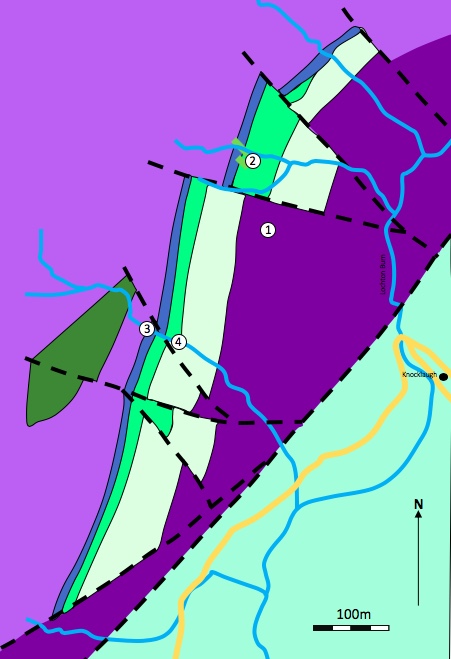
This disjointed band of metamorphic rocks at Knocklaugh is most interesting because its higher grade metamorphic rocks appear above the lower grades – an inversion of the more common arrangement where higher grade rocks are found lower in a sequence because more extreme temperature and pressures are associated with increasing depth and proximity to hotter rocks. A prevalent explanation for this inversion posits a hot slab of mantle peridotite being forced up, from great depth, and over oceanic crust so that thin layers of the crust adhered to its bottom surface forming the beginnings of a ‘sole’. The most extreme temperature and pressure conditions exists in the initial stages of this upthrust so that the already metamorphic crust that first adheres to the sole becomes the highest grade of metamorphic rock in the sequence. As the slab rises much of this metamorphic material is scraped off leaving only a thin layer, but it is replaced, in part, by new crustal material under metamorphic conditions that is now less extreme because the slab is cooling and it is closer to the surface, so the new sole material is of a lower metamorphic grade. And so on, (and upwards) losing higher-grade and adding lower-grade metamorphic material until the slab and its inverted metamorphic sole, high-grade to top, comes to rest onto the continental crust at Ballantrae. Thus, the explanation accounts for the metamorphic sequence as well as providing evidence for the Ballantrae Complex being an obducted ophiolite.
Location 1. The olistostrome and spilitic lava lying beneath the metamorphic ‘sole’ NX169920
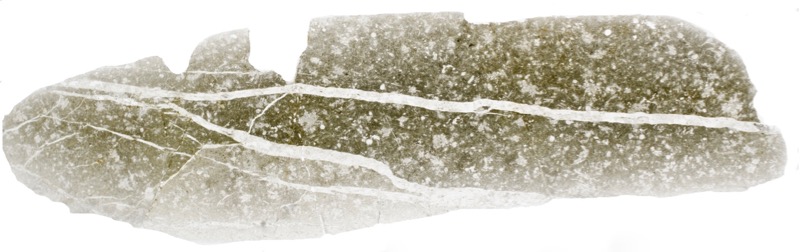
Specimen 1

Prepared specimen viewed in reflected light (36 mm across)


The section is slightly over-thinned in order to better show the twinning and interference colours in the carbonate content

Section is viewed in plane polarised light (FoV 2.3 x 1.5 mm)


Section viewed in plane polarised light (FoV 0.5 x 0.3 mm)

Specimen 2

Prepared specimen viewed in reflected light (50mm across)


Section is viewed in plane polarised light (FoV 2.3 x 1.5 mm)


Section is viewed in plane polarised light (FoV 0.5 x 0.3 mm)


Section viewed with crossed polarising filters (FoV 1.2 x 0.8 mm)
Specimen 3

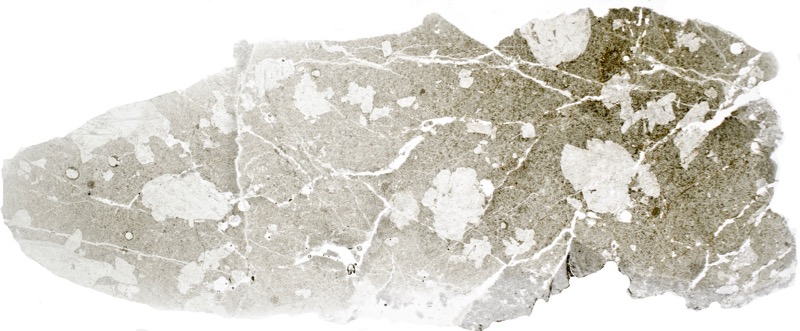
Prepared specimen viewed in reflected light (46 mm across)


Section is viewed in plane polarised light (FoV 1.2 x 0.8 mm)

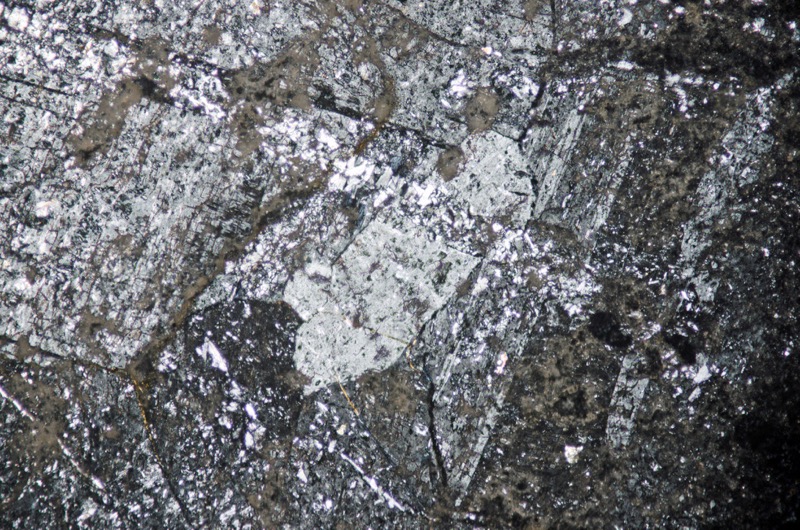
The twinning is visible on the right hand side of the image. Section viewed with crossed polarising filters (FoV 1.2 x 0.8 mm)
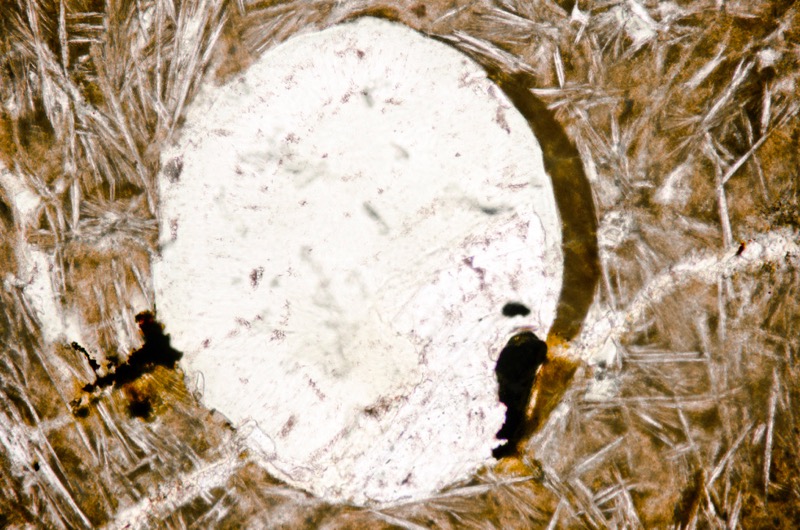
Section is viewed in plane polarised light (FoV 1.2 x 0.8 mm)
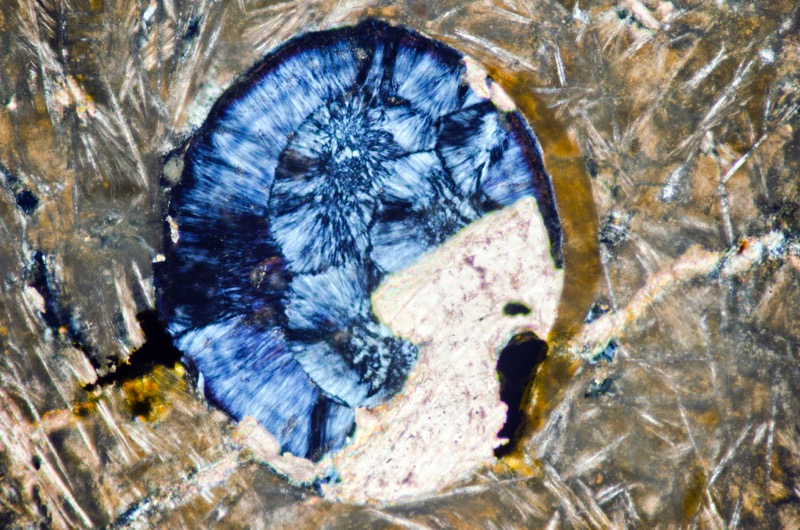

Section is viewed in plane polarised light (FoV 1.2 x 0.8 mm)
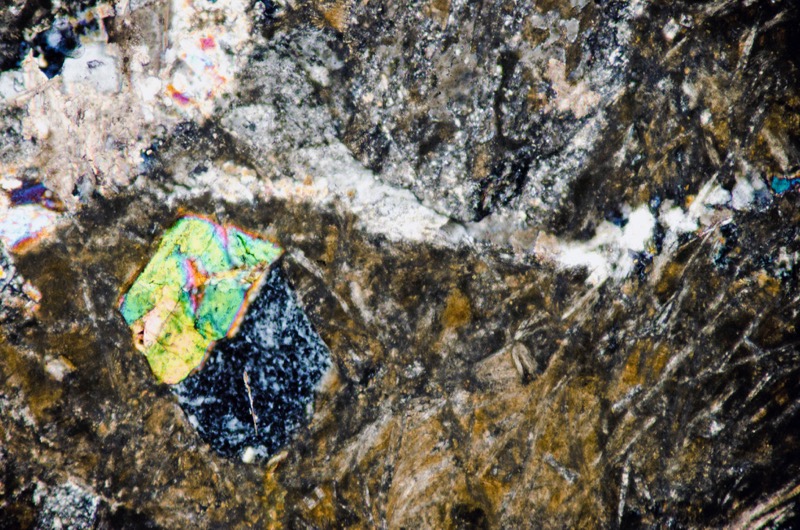
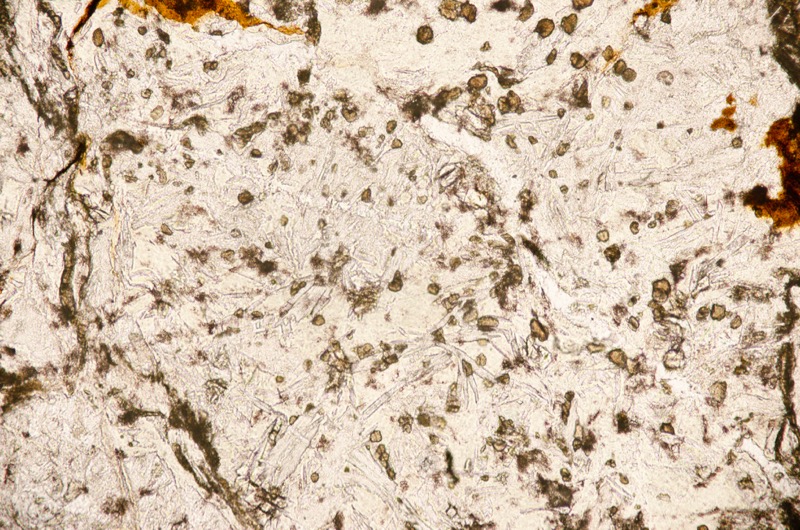
Section is viewed in plane polarised light (FoV 1.2 x 0.8 mm)

Location 2. Anomalous greywacke at NX169921
In an area where we would expect to find amphibole schist, we find relatively unaltered greywacke containing mostly felsic material along with a little that is mafic and some that is opaque.
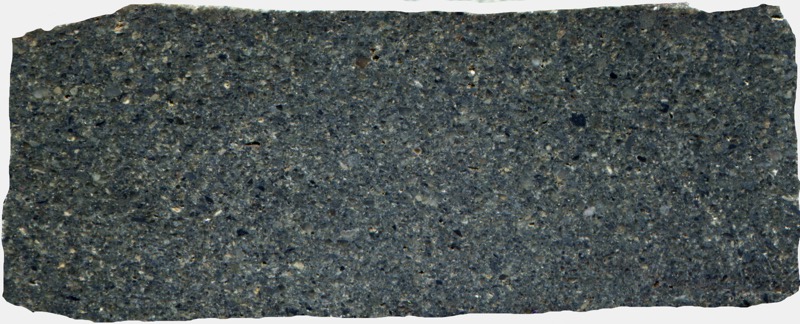
Prepared specimen viewed in reflected light (52 mm across)

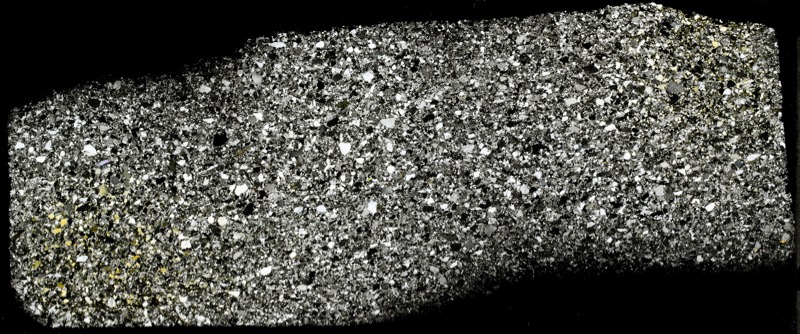
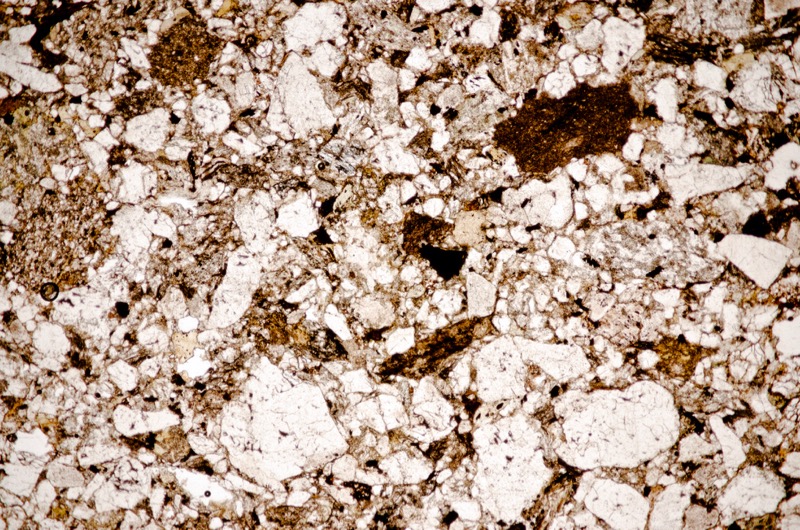
Section is viewed in plane polarised light (FoV 4.6 x 3.0 mm)
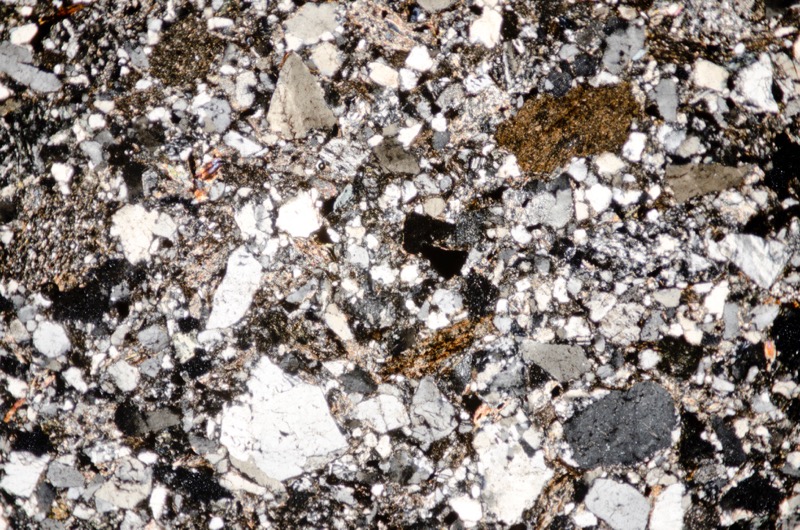
Section viewed in plane polarised light (FoV 5.0 x 3.0 mm)
Location 3. Serpentinite at NX168919
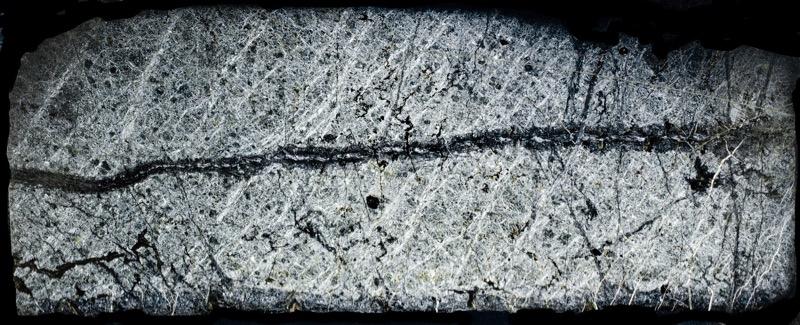
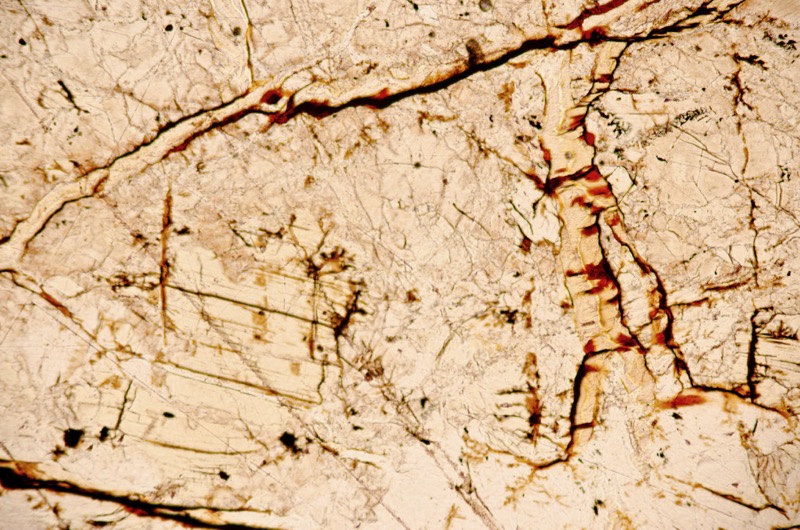
A short distance to the south, we collect serpentinite from the stream at a point close to the mapped junction between the serpentinite and meta-pyroxenite.
Specimen 1
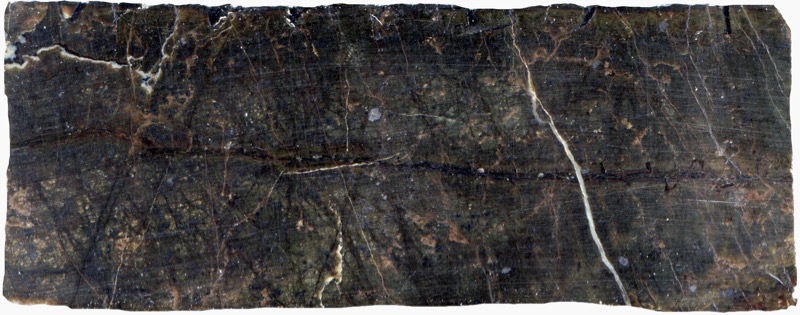
Prepared specimen viewed in reflected light (52 mm across)
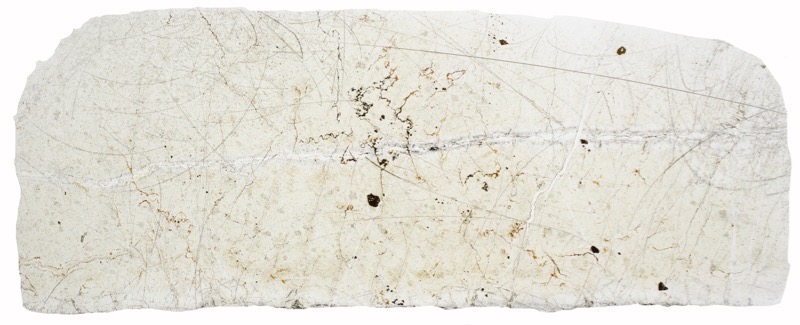
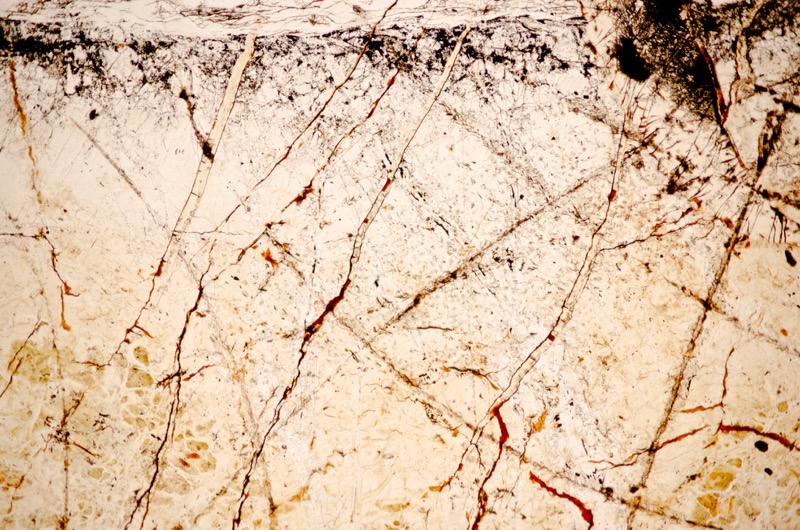
Section is viewed in plane polarised light (FoV 4.6 x 3.0 mm)
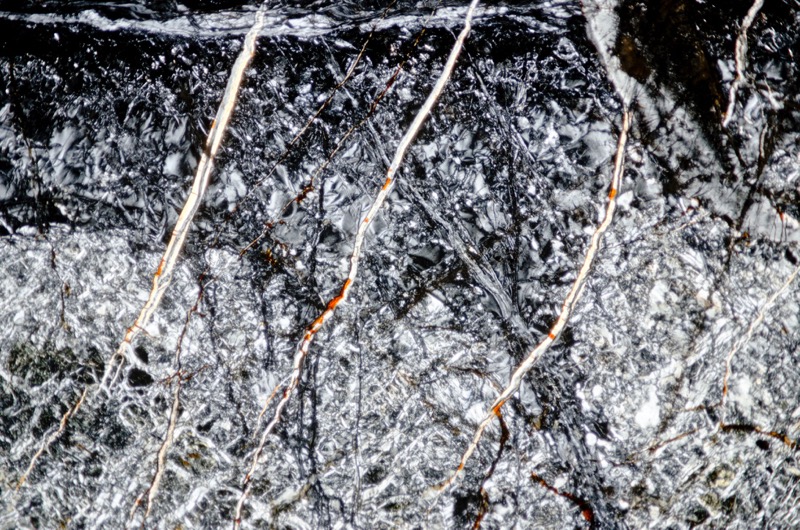
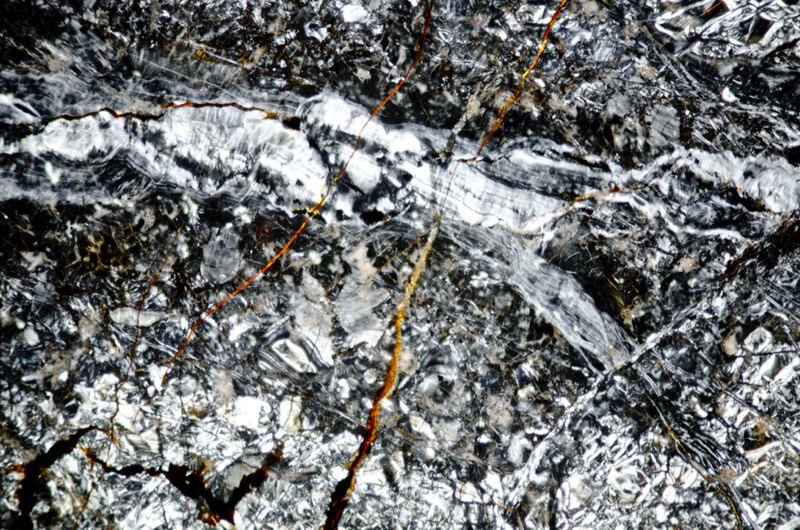
Sample viewed with crossed polarising filters (FoV 2.3 x 1.5 mm)
Specimen 2
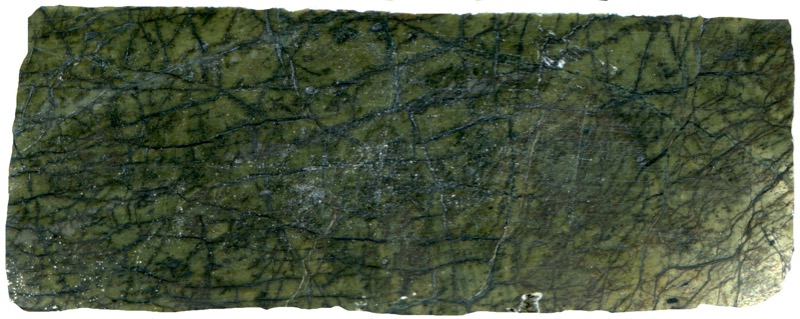
Prepared specimen viewed in reflected light (52 mm across)
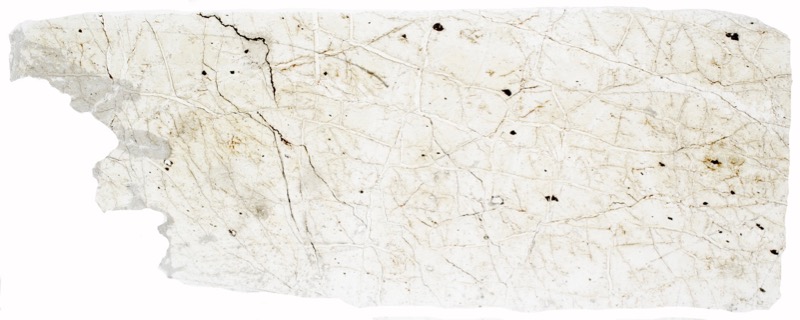
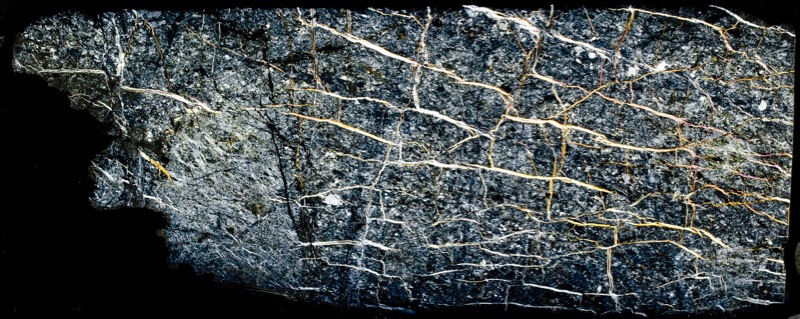
The section, slightly over 0.03 mm thick, is viewed in plane polarised light (FoV 2.3 x 1.5 mm)

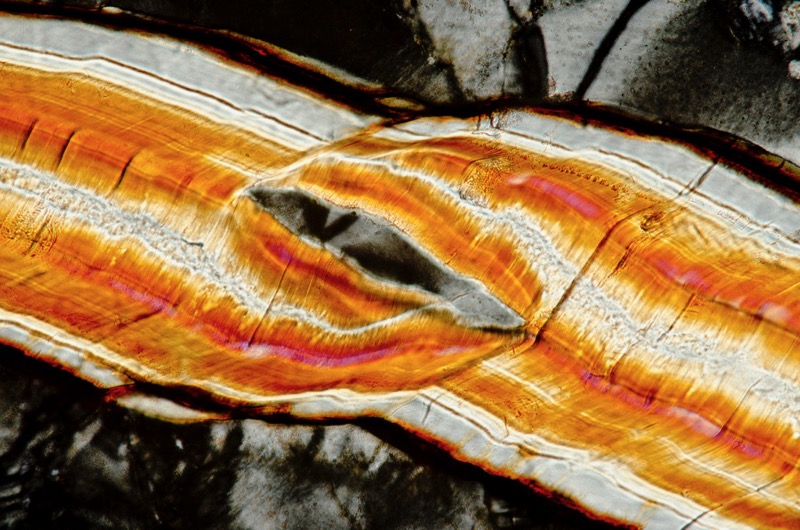
The section, slightly over 0.03 mm thick, is viewed in plane polarised light (FoV 0.5 x 0.3 mm)
Location 4. Amphibolite at NX168919
Specimen 1
A short distance downstream, we come to the amphibole schist. Its banded appearance is related to the more or less parallel bands of material that, in thin section, ranges in colour from lemon yellow to golden yellow which has disrupted the amphibolite. These bands are themselves cross-cut in places with clear veins of chrysotile.
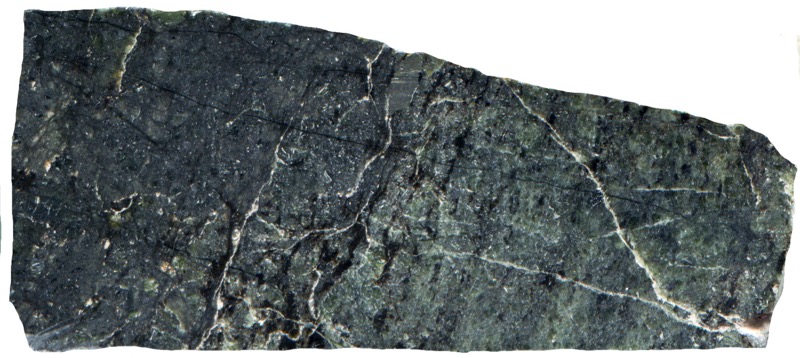
Prepared specimen viewed in reflected light (52 mm across)
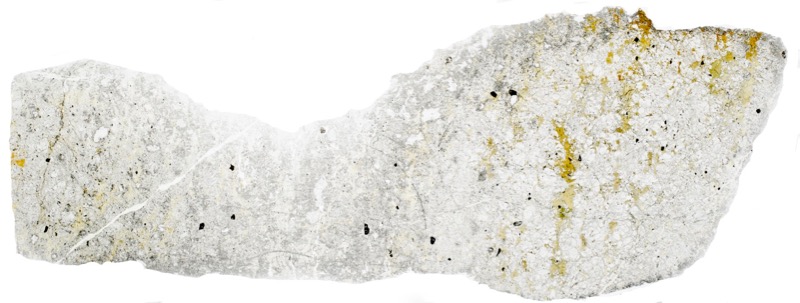
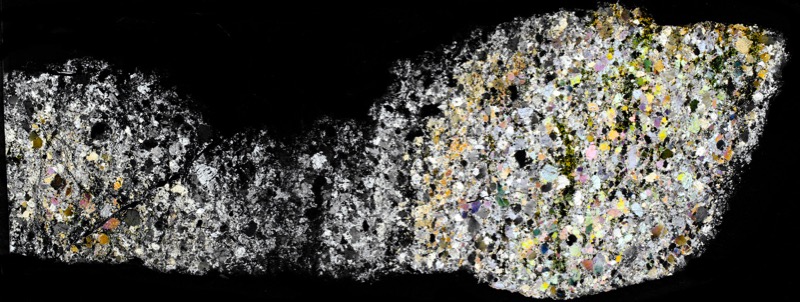
Section is viewed in plane polarised light (FoV 4.6 x 3.0 mm)
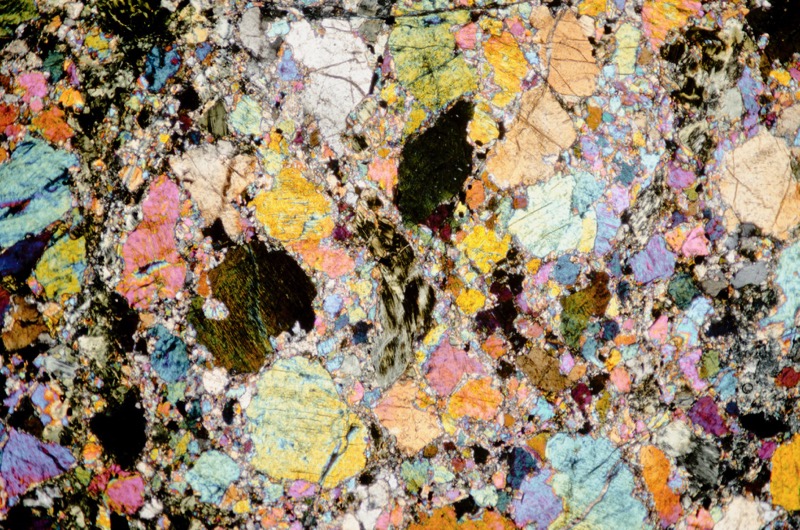
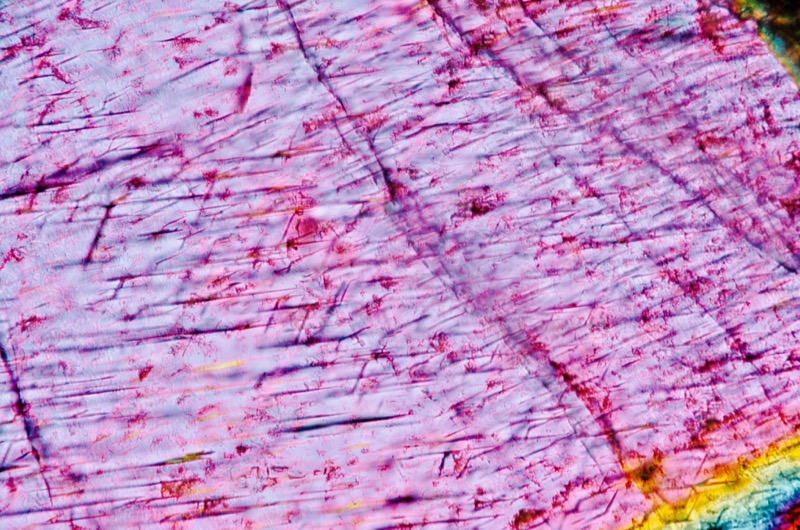
Section viewed in plane polarised light (FoV 0.5 x 0.3 mm)

Section viewed in plane polarised light (FoV 2.3 x 1.5 mm)
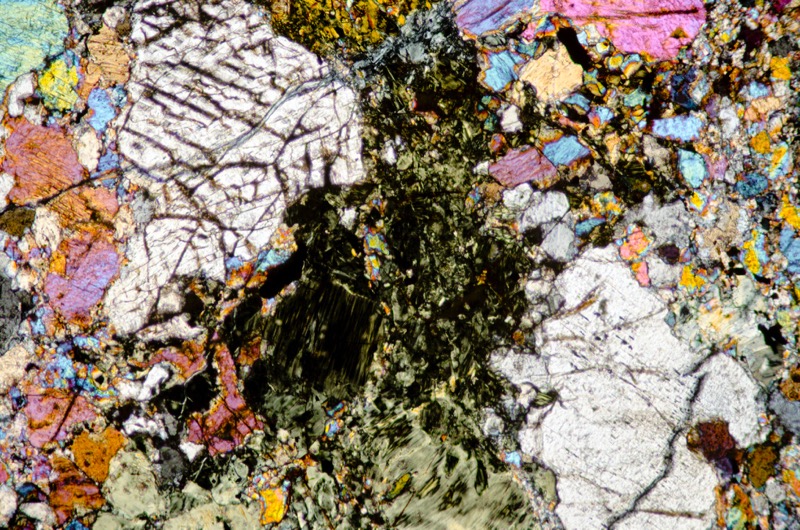
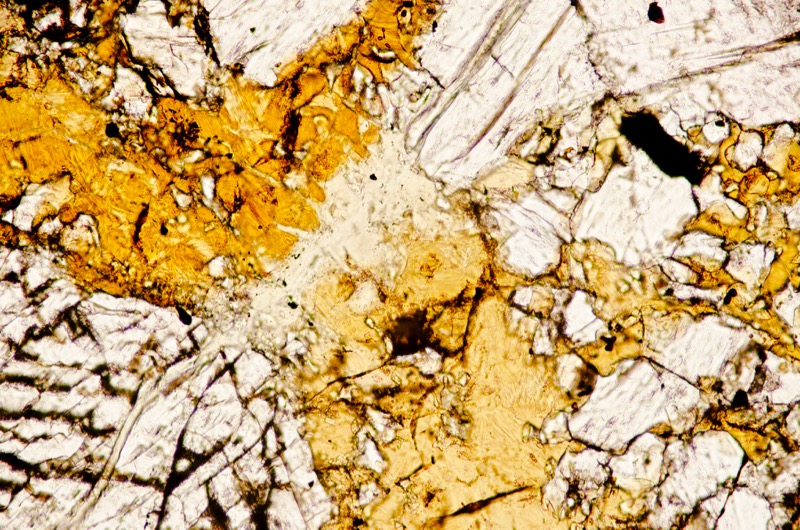
Section is viewed in plane polarised light (FoV 1.2 x 0.8 mm)
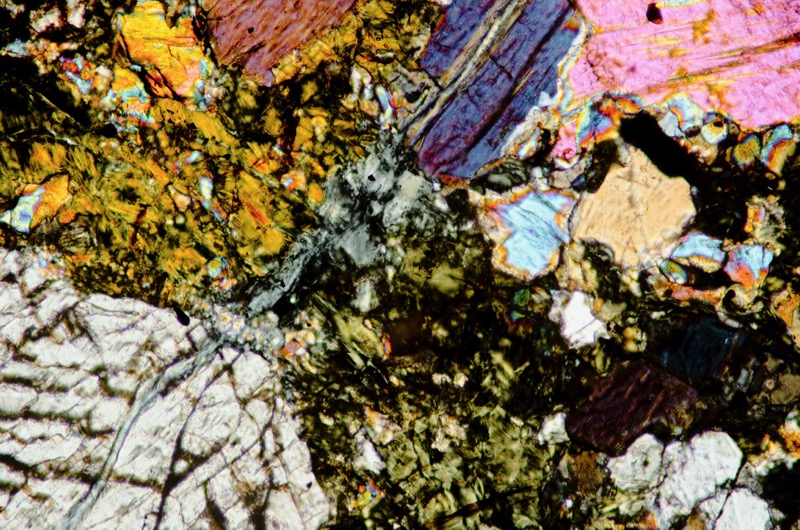
Specimen 2
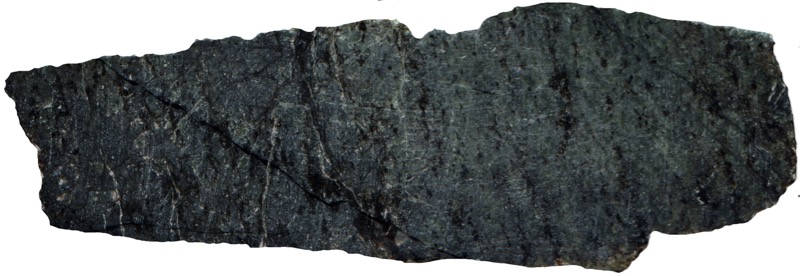
Prepared specimen viewed in reflected light (52 mm across)

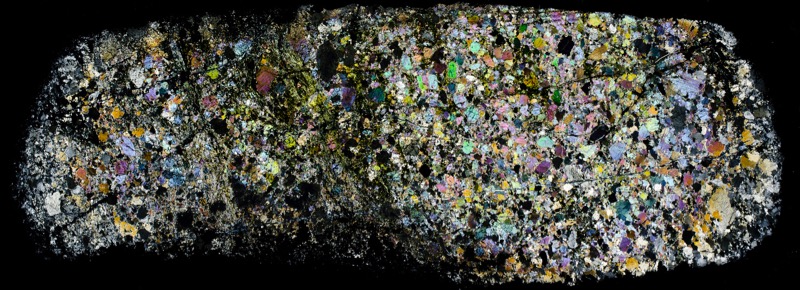
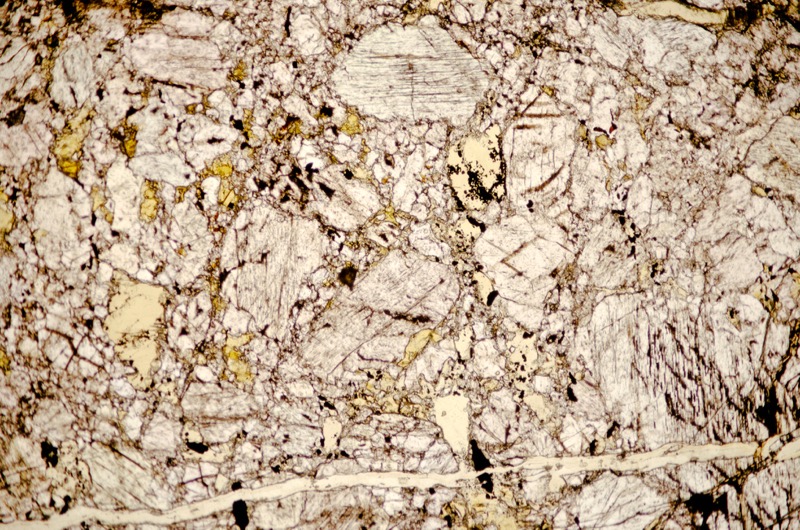
Section is viewed in plane polarised light (FoV 4.6 x 3.0 mm)


When over-thinned the oxides have brown edges and sometimes brown interior patches possibly indicating high chrome content.
Section viewed in plane polarised light (FoV 2.3 x 1.5 mm)
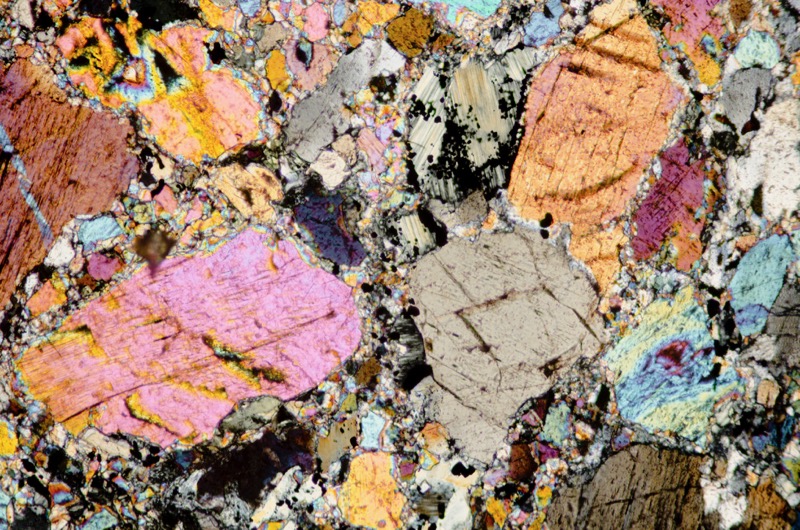
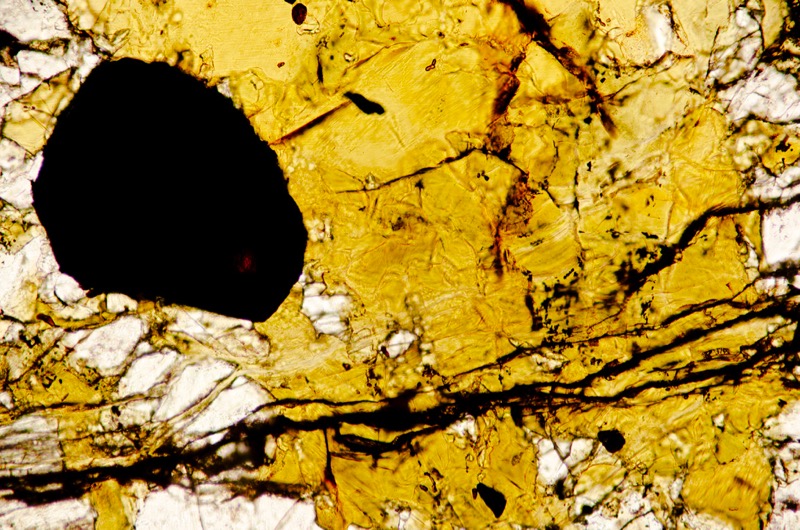
viewed in plane polarised light (FoV 0.5 x 0.3 mm)
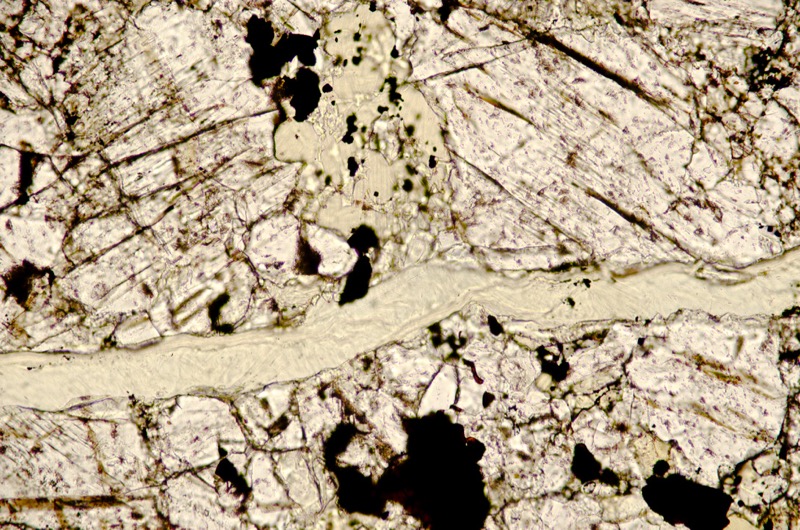
Section is viewed in plane polarised light (FoV 1.2 x 0.8 mm)

References
P. Stone, 2014, A Review of Geological Origins and Relationships in the Ballantrae Complex, SW Scotland, Scottish Journal of Geology, Volume 50, 1-25.,
P. Stone (et. al.), 2012, British Regional Geology, South of Scotland 4th edition, British Geological Society, Nottingham.
G.J.H. Oliver, P. Stone & B.J. Bluck, 2003, The Ballantrae Complex and Southern Uplands Terrain appearing in The Geology of Scotland ed. N.H. Trewin Geological Society.
Lawson, J.D. and Weedon, D.S. (editors), 1992, Geological excursions around Glasgow & Girvan. Glasgow : Geological Society of Glasgow.
British Geological Society Online Maps
https://mapapps.bgs.ac.uk/geologyofbritain/home.html
http://mapapps.bgs.ac.uk/geologyofbritain3d/[/wr_text]