Skelfhill Pen
‘On my hills the moon-beams play.
From Craik-cross to Skelfhill-pen,
By every rill, in every glen,
Merry elves their morris pacing…’ Sir Walter Scott

The long, dyke-like intrusion of phonolite outcrops along the ridge from the lower NE end (mid-left in the photograph) to the north-facing crags visible below the summit.
Skelfhill Pen is quite popular amongst hill walkers on account of its situation, distinctive shape, trig point, cairn and fine views of the surrounding countryside. A walk to the hill is sometimes by way of Knowes Head and Greatmoor Hill but we parked in the space down the hill from the track to Skelfhill Farm, followed this track to Skelfhill Pen, and returned via Grey Pen.
Map showing showing rock types in the area of Skelfhill Pen and Grey Pen with sample locations on Skelfhill Pen shown as circles.


The igneous rock here is interesting on account of it being so rich in sodium and low in silica; characteristic traits of rock derived from magma intruded in areas subject to extensional forces and rifting.
We sampled from four locations on the hill (marked on the map with circles). The rock on the little north-eastern ridge to the summit is quite a hard pink-brown, fine-grained trachytic rock with a groundmass of sanidine microlites enclosing small crystals of aegirine augite, nepheline and riebeckite. Some of the rock that has been altered to a deeper pink contains more haematite and is very weak.
The rock in the crags below the summit is less trachytic, much darker (almost black in places) and very hard. There is a gradual transition from the pink to the dark rock.
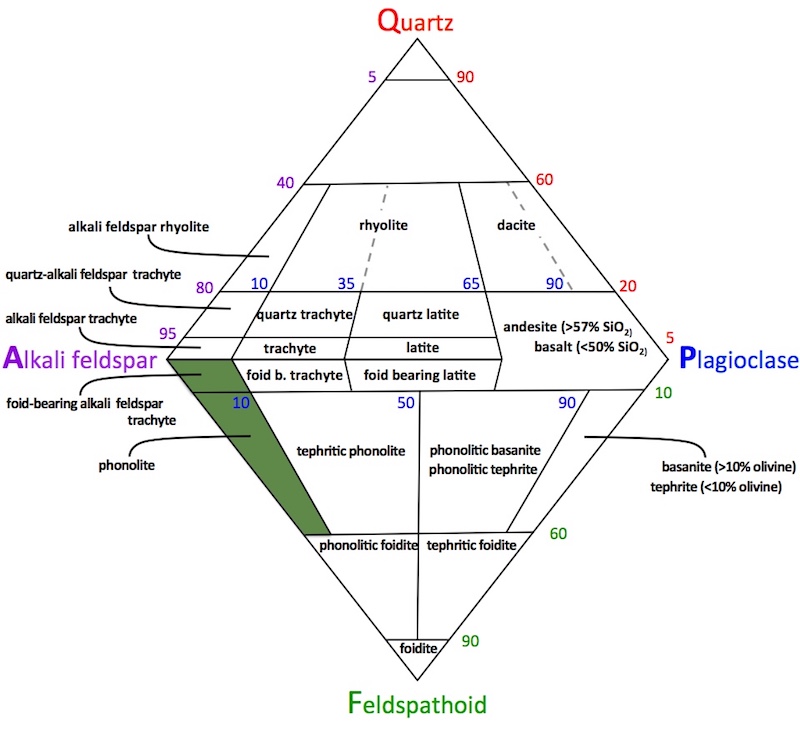
The BGS records the general rock type as phonolite to phonolitic trachyte, the latter containing less nepheline than the former.
Location 1. Ridge on the north-east side at NT444031
The trachytic structure of the rock, in which the sanidine laths are aligned along lines of flow in the magma, is very well defined here.
Rachel McRobert describes its mineral content as, ‘Aegerine-augite in rectangular microlites, or grass-green micro-ophitic patches. Acmite in microlites and laths, pleochroic from brown toyellow, and subordinate in amount. Riebeckite in deep blue sub-ophitic patches or tiny flakes. Nepheline, very abundant in small idiomorphic crystals withsquare or hexagonal sections and magnetite, in octahedra.’
Acmite and aegirine are now considered to be the same mineral belonging to the pyroxene group, acmite being a sodium-rich variety of aegirine. They were originally believed to belong to separate groups, acmite to the amphiboles and aegirine to the pyroxenes.
‘Acmite’ is no longer a credited mineral name but in the descriptions of the photomicrographs that follow, we have found it helpful to use the name to distinguish between the two forms of pyroxene visible in the rock at Skelfhill Pen.

Prepared specimen viewed in reflected light.
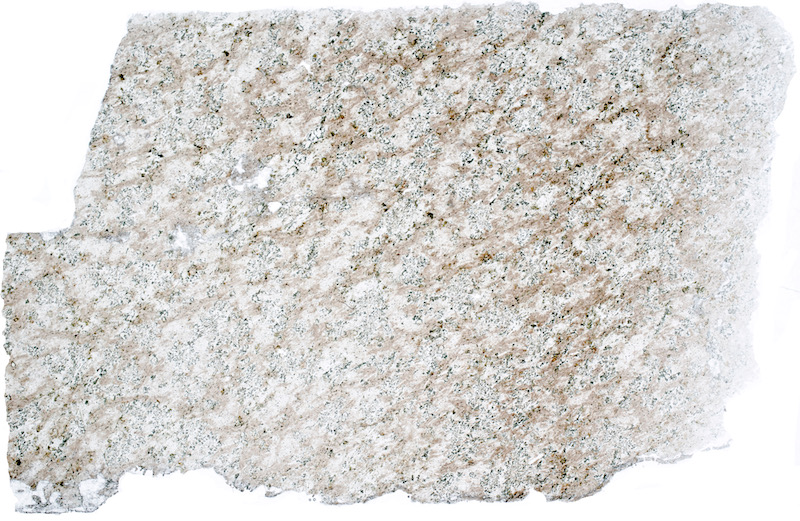


Section viewed with crossed polarising filters (FoV 4.6 x 3.0 mm)

Viewed in plane polarised light (FoV 0.5 x 0.3 mm)

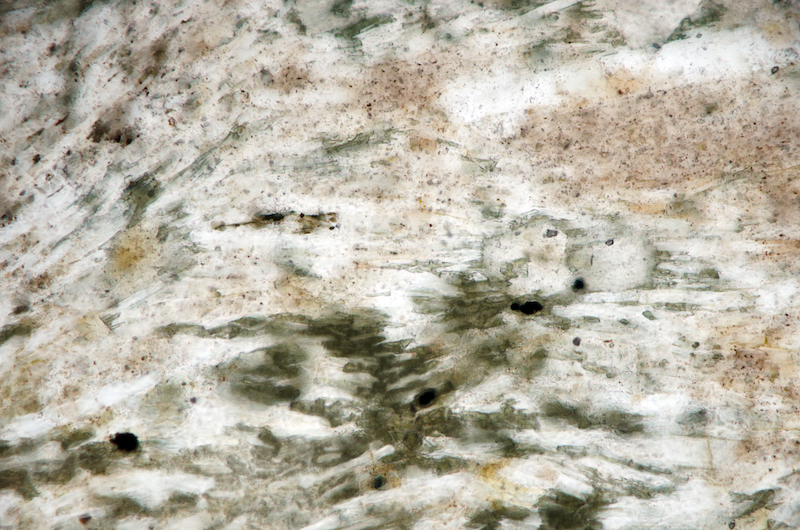
With the polariser set to polarise light in the vertical plane, the acmite is a green-brown colour and the riebeckite is a pale grey (FoV 0.5 x 0.3 mm)
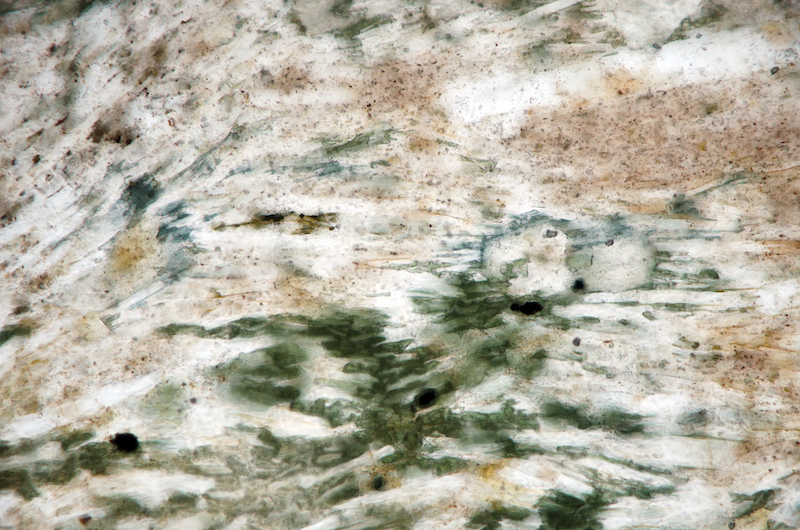
With the polariser set horizontally, the grey to blue pleochroism of the riebeckite and the green-brown to green pleochroism of the acmite are clearly visible. Section viewed in plane polarised light.
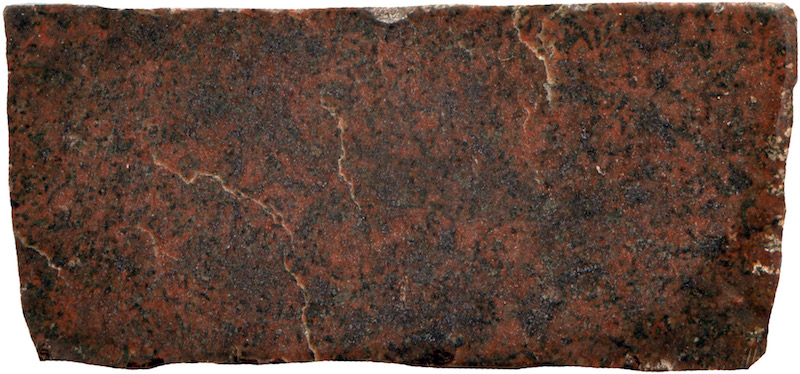
Prepared specimen viewed with in reflected light (measures 44mm across)


Section viewed in plane polarised light (FoV 4.6 x 3.0 mm)

Section viewed with crossed polarising filters

Section viewed in plane polarised light (FoV 0.5 x 0.3 mm)

Section viewed in plane polarised light. (FoV 1.2 x 0.8 mm)

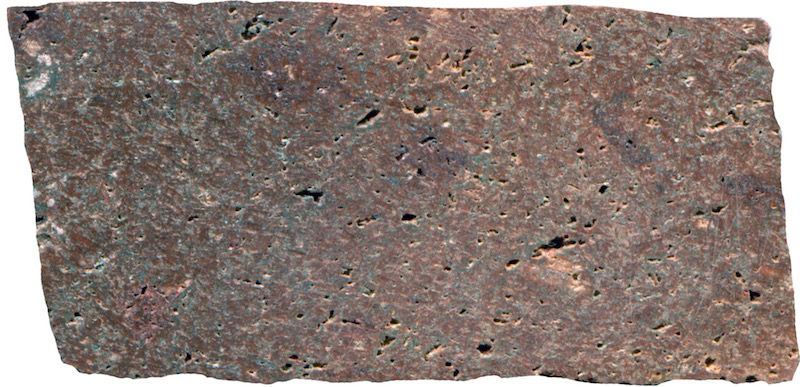
Prepared specimen viewed in reflected light (measures 43mm across)
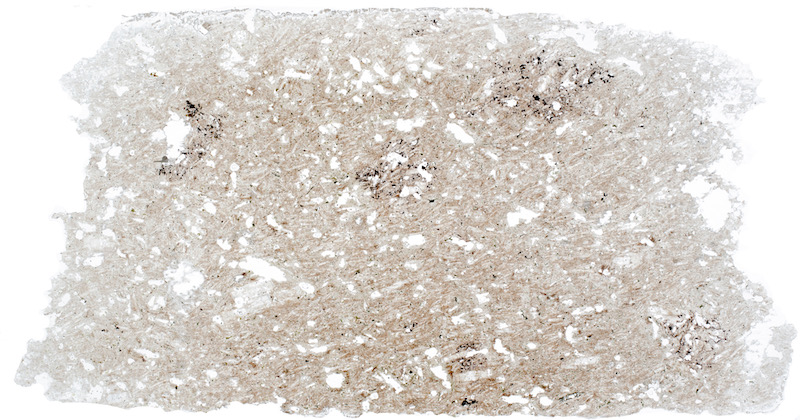
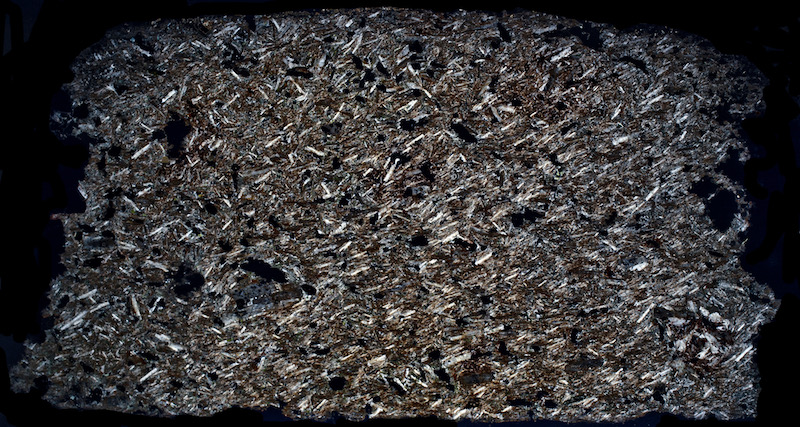

There are many holes in this section, some existing in the original rock and some as a consequence of thinning because the rock is so weak. (FoV 4.6 x 3.0 mm)

There are many holes in this section, some existing in the original

Along with the haematite there is an unidentified green, non-pleochroic, moderate RI alteration product seen bottom left. Section viewed with crossed polarising filters (FoV 1.2 x 0.8 mm)
Location 2. Phonolite crags below the summit at NT442031

The rock in the crags below the summit is much darker and harder than elsewhere on the Skelfhill Pen and is thought to be the least altered. Thin sections reveal less flow structure in the sanidine and nepheline groundmass and a lack of riebeckite, at least in the samples we took. Individual grains of aegirine-augite are more abundant here than in the more trachytic rock but still occurring in close association with the acmite and nepheline . It is tempting to interpret the differences in the two rock types as evidence of their origins in two related, but different magmas.
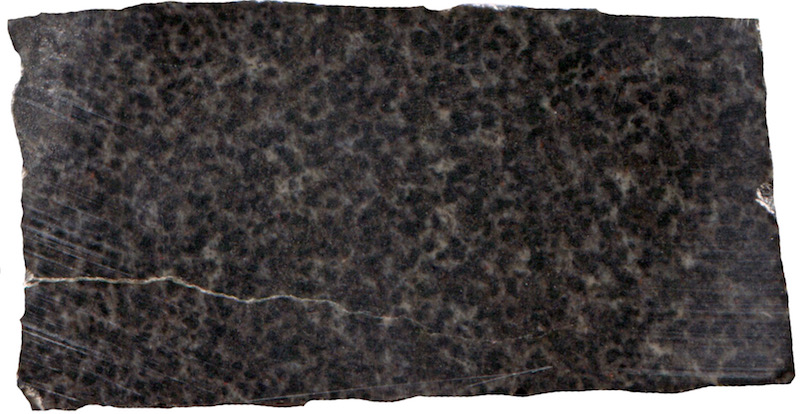
Prepared specimen viewed with in reflected light (measures 46mm across)
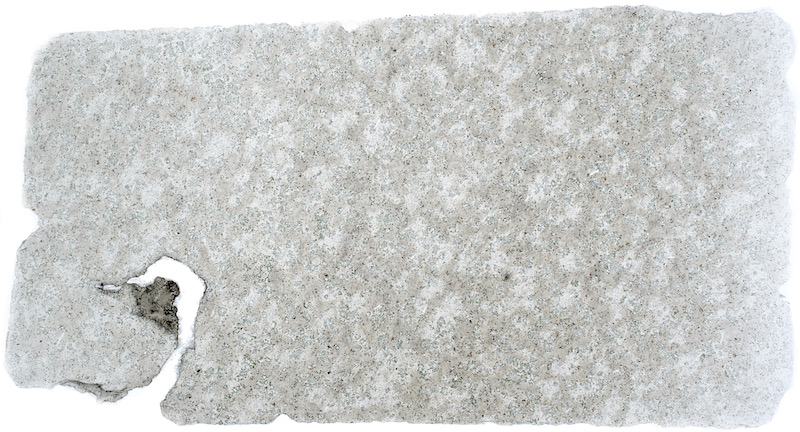

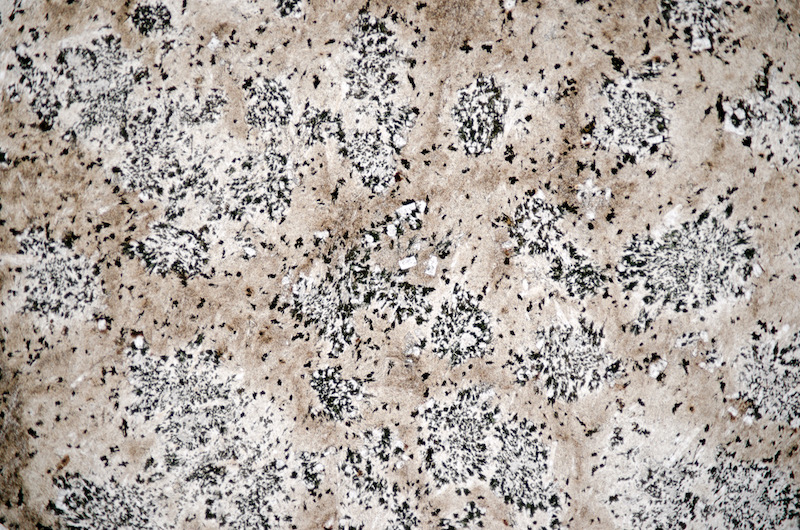
The mafic minerals are concentrated in the less turbid patches of rock. Section viewed in plane polarised light (FoV 4.6 x 3.0 mm)

The clear nepheline crystals have a typically stubby, rectangular appearance. Section viewed in plane polarised light (FoV 1.2 x 0.8 mm)


In plane polarised light, the aegirine-augite has higher relief, is more strongly pleochroic and has a less intense colour than the acmite (FoV 1.2 x 0.8 mm)

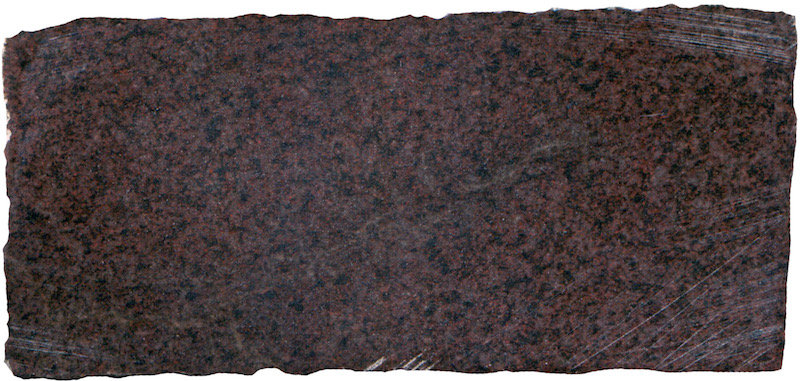
Prepared specimen viewed in reflected light (measures 45mm across)


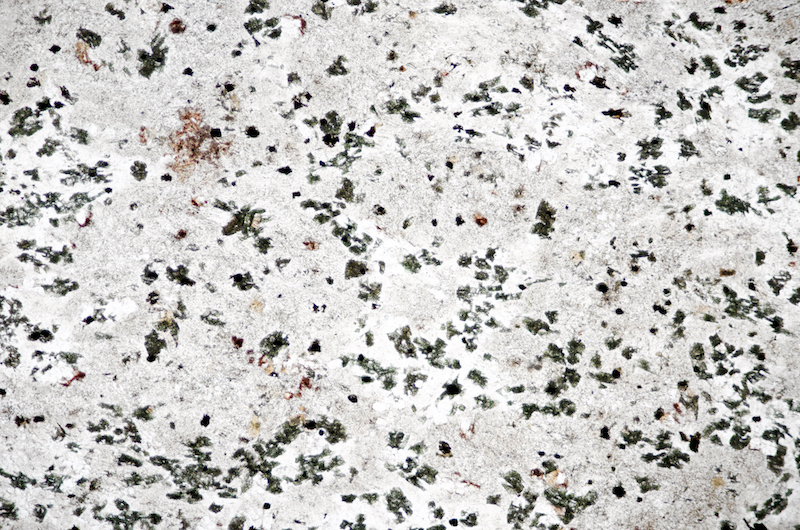
Again the pyroxene is more concentrated in the less turbid patches whereas the haematite is more concentrated in the more turbid regions. Section viewed in plane polarised light (FoV 2.3 x 1.5 mm)
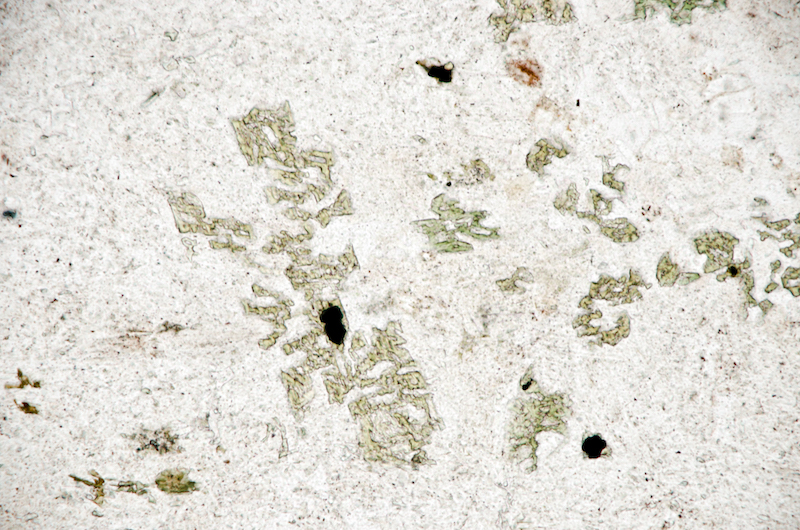
Section viewed in plane polarised light (FoV 0.5 x 0.3 mm)


When the section is very thin the interference colours of the acmite are visible. (FoV 0.5 x 0.3 mm)
Grey Pen

Approaching from this direction, Grey Pen obscures Skelfhill Pen
From Skelfhill Pen we walk the short distance north over to Grey Pen. where the rock is very different.
Map with sample locations on Grey Pen shown as circles

McRobert thought Grey Pen may have been the old plugged up main vent of the volcano.She described the rock as, ‘ a very fine-grained, typical non-porphyritic aegerine-trachyte. The sanidine, partly turbid, occurs in good laths showing splendid fluxion-structure; aegerine, quite subordinate, and magnetite dust make up the rest.’ adding, ‘ Nepheline was tested for, but proved absent.’
The flow texture in the ground mass really is well defined with striking waves of feldspar laths flowing around the many inclusions in the rock.
QAPF diagram showing the composition of trachytes relative to other extrusive rock types

Location 3. Trachyte on the south west slope at NT444034
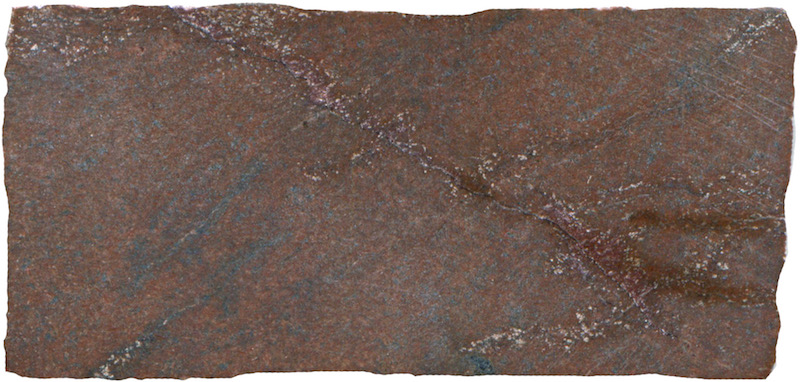
Prepared specimen viewed in reflected light (41mm across)


Section viewed in plane polarised light (FoV 2.3 x 1.5 mm)

The rock on Grey Pen is quite shattered, much of it falling away in large and small plates. It is heavily altered so that all our samples contained quantities of haematite along with carbonate and chloritic minerals. The inclusions range from microscopic fragments to pieces clearly visible with the naked eye and when polished, the rock is visually very interesting.
One inclusion has a group of stumpy, rectangular crystals edged wth iron oxide. They are altered plagioclase, highly carbonated but still showing the remnants of polysynthetic twinning.

Location 4. Trachyte on the west slope at NT445035

Prepared specimen viewed with in reflected light (measures 40mm across)

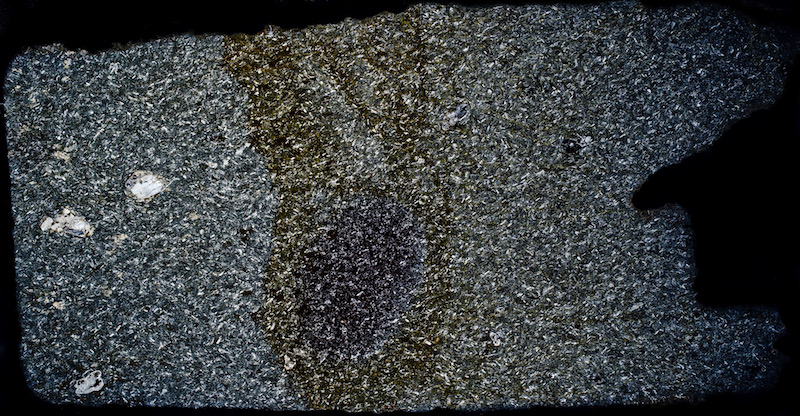
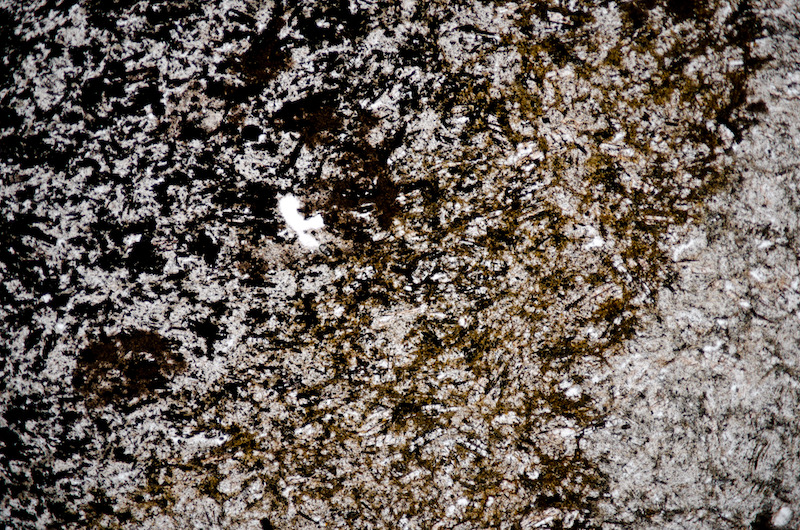
Section viewed in plane polarised light (FoV 4.6 x 3.0 mm)

Section viewed in plane polarised light (FoV 2.3 x 1.5 mm)
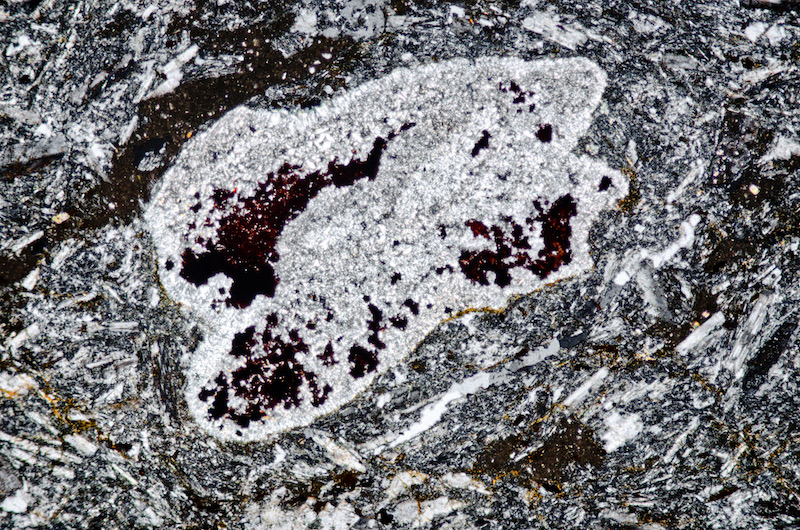

Prepared specimen viewed in reflected light ( 44mm across)

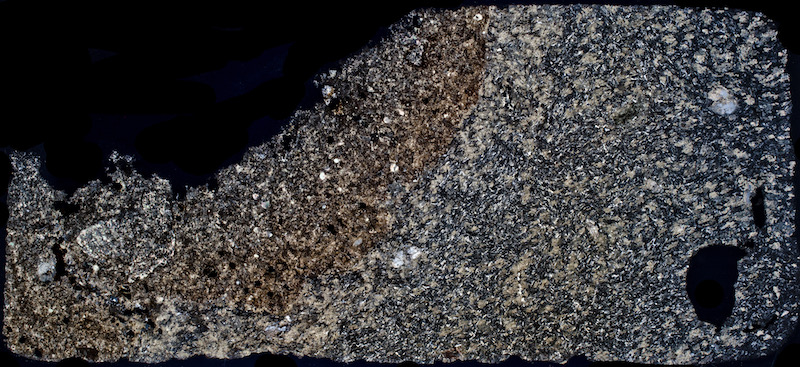

Section viewed in plane polarised light(FoV 4.6 x 3.0 mm)

Location 5. Trachyte on the north-east slope at NT449036
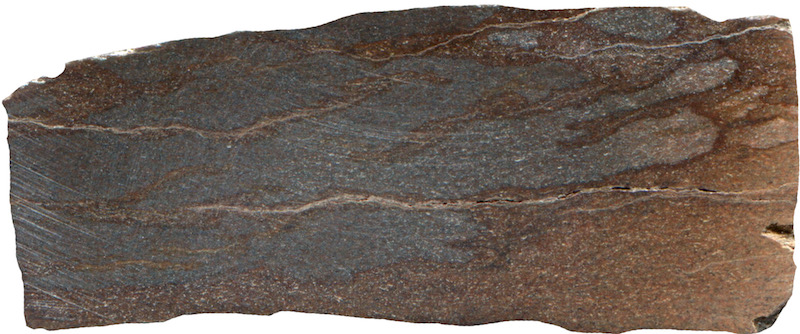
Prepared specimen viewed in reflected light (measures 44mm across)
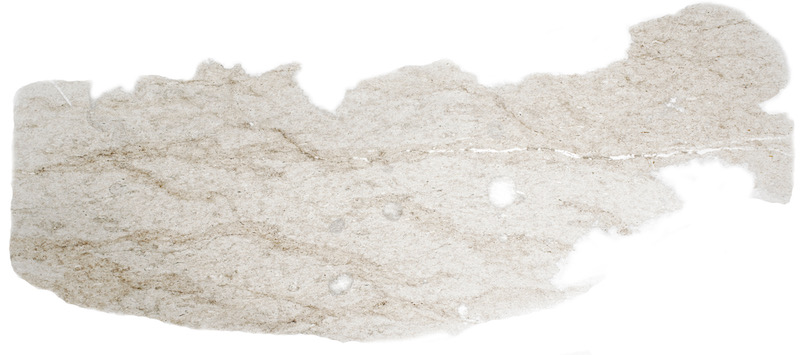
Thin section viewed in plane polarised light


Section viewed in plane polarised light (FoV 2.3 x 1.5 mm)


The trachytic rock looks much the same in all the outcrops around the hill – the views change considerably.
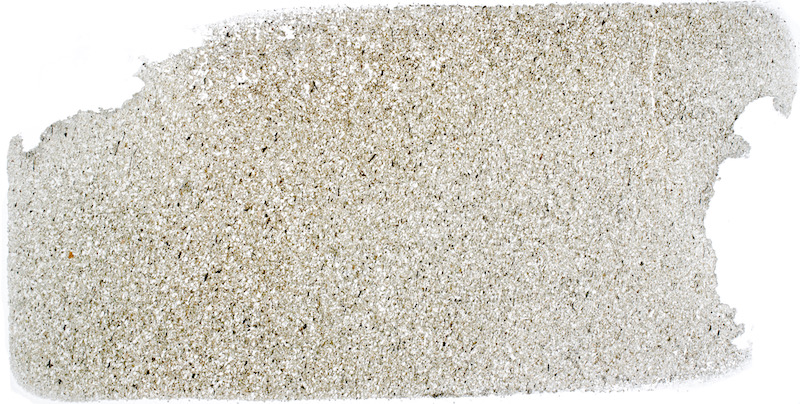
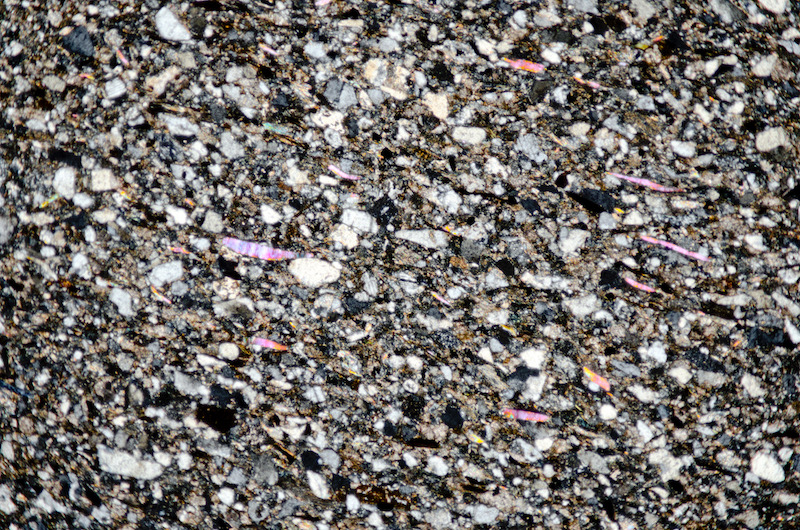
On the way back to the car we picked up a sample of the Silurian greywacke, the host rock for the Grey Pen and Skelfhill Pen intrusions. In thin section there does seem to be some alignment of the larger crystals highlighted by the white mica that we see in our sample.

Location 6. Greywacke by stream

Prepared specimen viewed in reflected light (measures 42mm across)


There are mica crystals orientated in the same plane as other longer crystals in the carbonate ground.Section viewed with crossed polarising filters (FoV 5.0 x 3.0 mm)
References
McRobert R.W. Igneous rocks of Teviot and Liddesdale Transactions of the Edinburgh Geological Society, 11, 86-103, 1920, https://doi.org/10.1144/transed.11.1.86
BGS online Geology of Britain http://mapapps.bgs.ac.uk/geologyofbritain/home.html