Location 1. The first outcrop at NT9450 2168
Location 2. Highly altered blotchy rock at NT9282 2033
Location 3. Low quartz, alkali-rich, high mafic content rock below the first waterfall at NT927202

This excursion takes us up the beautiful Harthope Valley to the waterfalls at Harthope Linn. We walk along one of the major geological faults in the Cheviot complex where, according to Robson, andesitic lava may have poured out of vents or fissures in Devonian times. There are no signs of vents now, but we will see evidence for movements along the fault caused by tectonic forces in the Late Carboniferous as well as plentiful evidence for the hydrothermal activity that accompanied these movements.
Geological guide books identify the location of visible contact between two types of granitic rock here, the granophyric, medium-grained type and the coarser, non-granophyric ‘Standrop’ type. A sharp contact would show one type chilled against the other, it’s margin of smaller crystals resulting from more rapid cooling against the already consolidated older rock. This fact would indicate a sequence for the assembly of the Cheviot pluton. The contact is said to be in outcrops near the first of the valley’s two waterfalls and we hope to be able to confirm and record this.
Map showing the excursion route, locations and igneous rock types

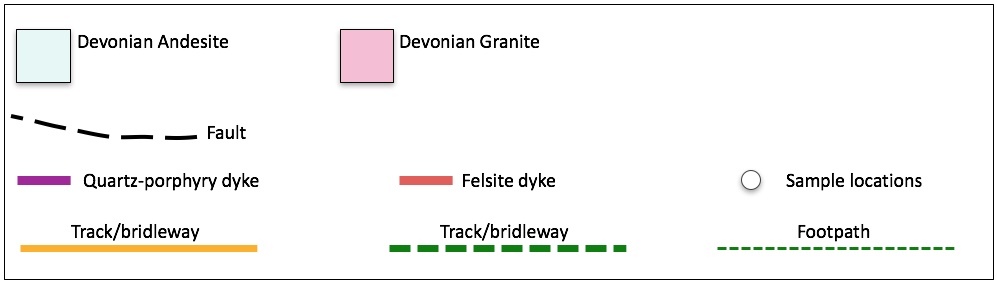
After parking on the grassy area just before the bridge over the Hawsen burn, we walk along the road past Langleford to our first location – a spot suggested by Colin Scuton in his very useful field guide, ‘Northumberland Rocks and Landscape’.
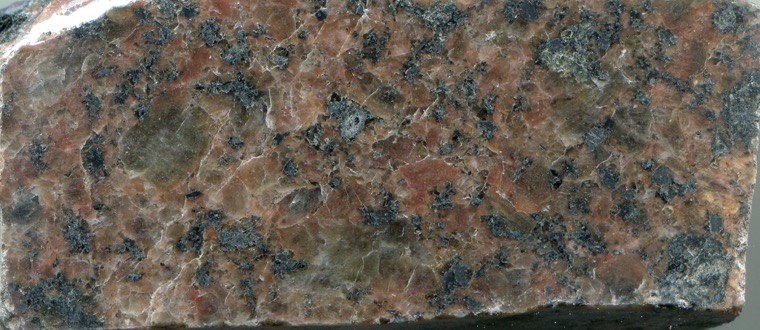
Colin Scruton describes the exposure here as a true granite of the ‘Granophyric’ variety being pink, medium-grained with pink feldspar, transluscent quartz and black shiny flakes of biotite. He draws attention to the 1cm thick veins of aplite that run through the rock and also the 2-3mm thick veinlets of black tourmaline.
The pink, medium-grained granite that we found here doesn’t have a granophyric texture but sure enough, aplite is all around, seemingly in larger areas than just 1cm veins, and tourmaline veinlets are common.

Specimen 1

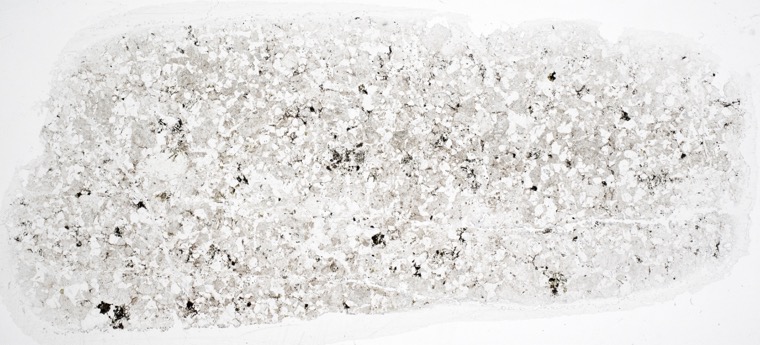
The sample measures 42mm across
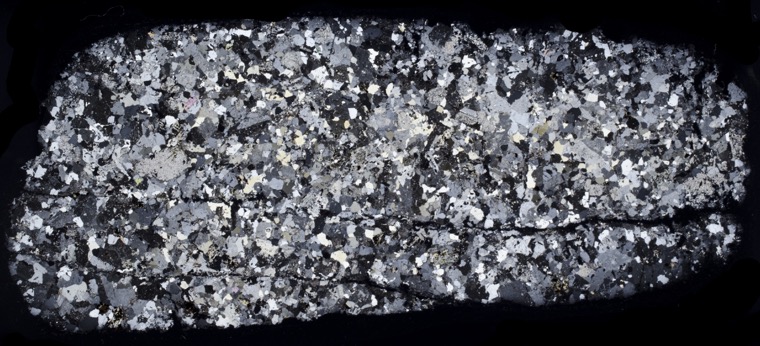
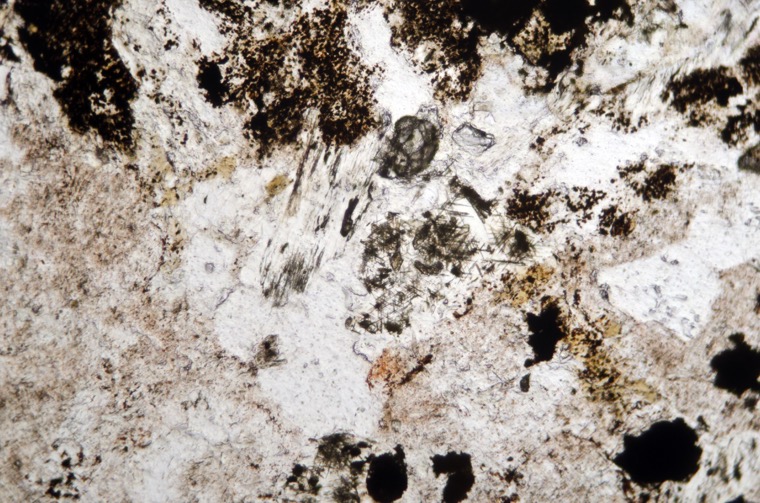
Specimen 2
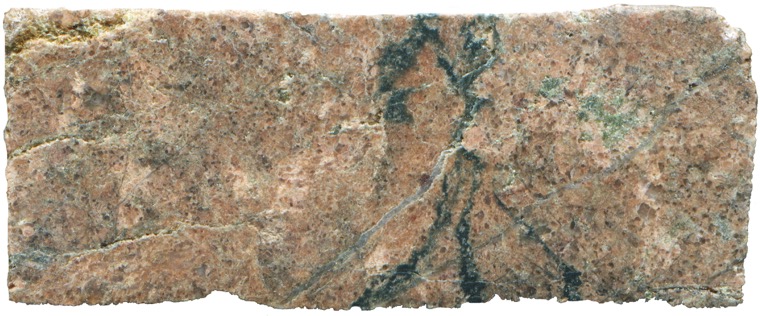
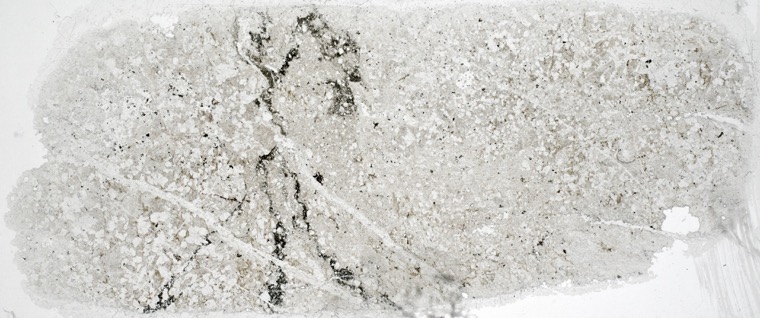
The sample measures 45mm across.
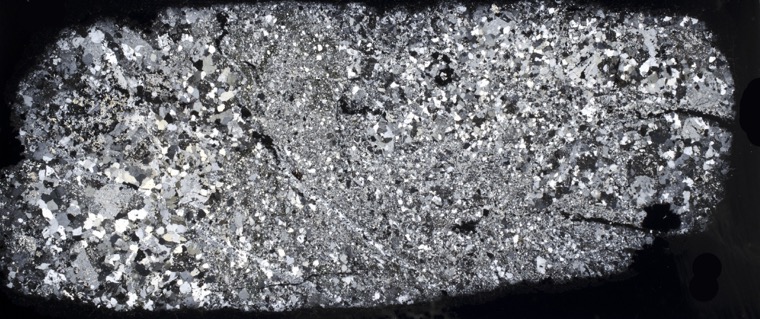
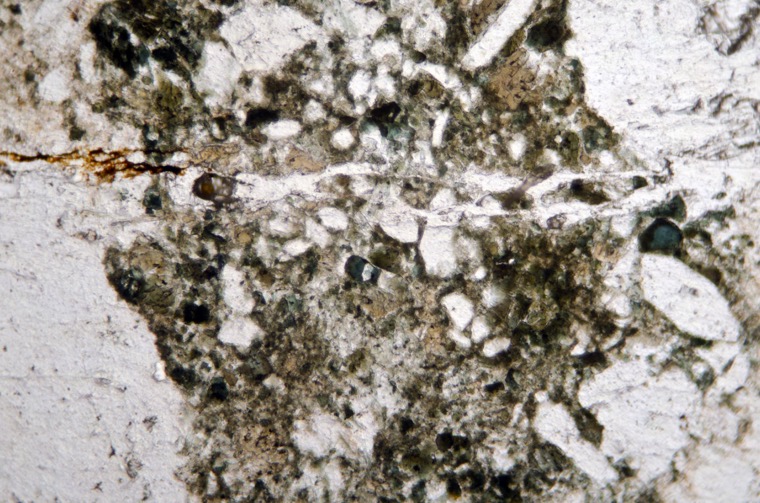
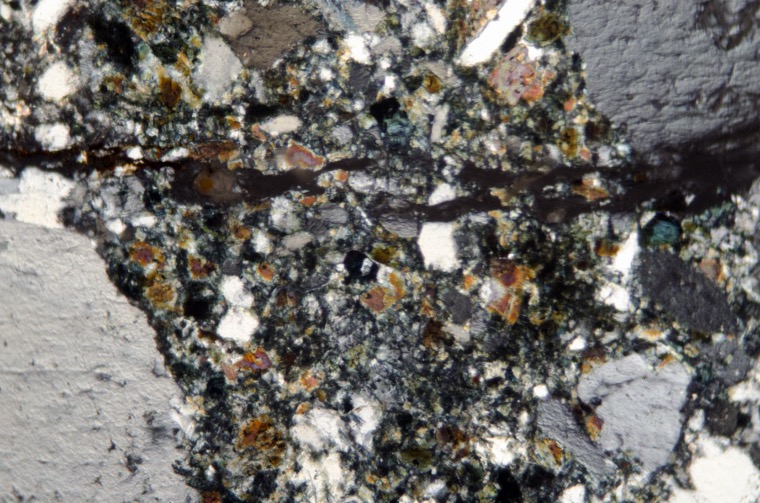

Continuing on the track past Langleford Hope we arrive at a point where the track crosses a small eastwards-flowing stream that runs into the Harthope Burn (NT 9280 2038). We go down the level of the Harthope Burn and scramble a short distance alongside the burn under its steep northern bank to our second location at NT 9282 2033.
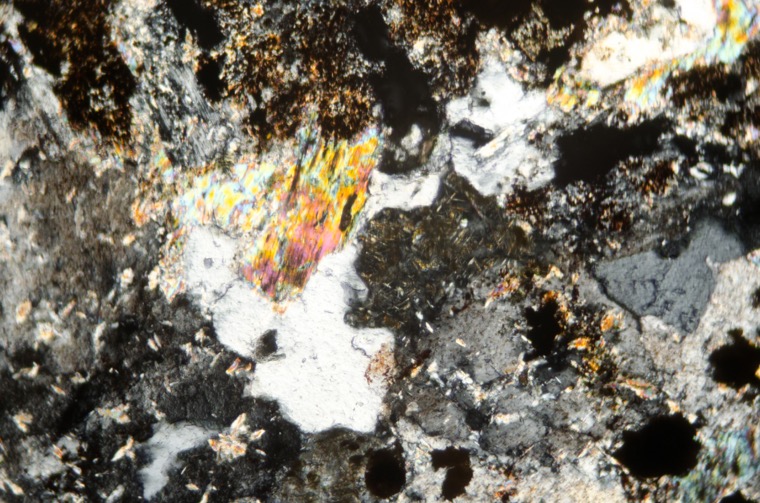
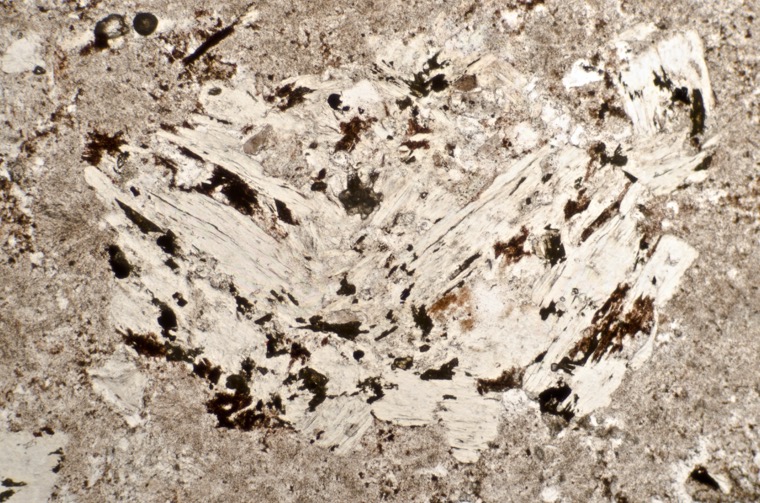
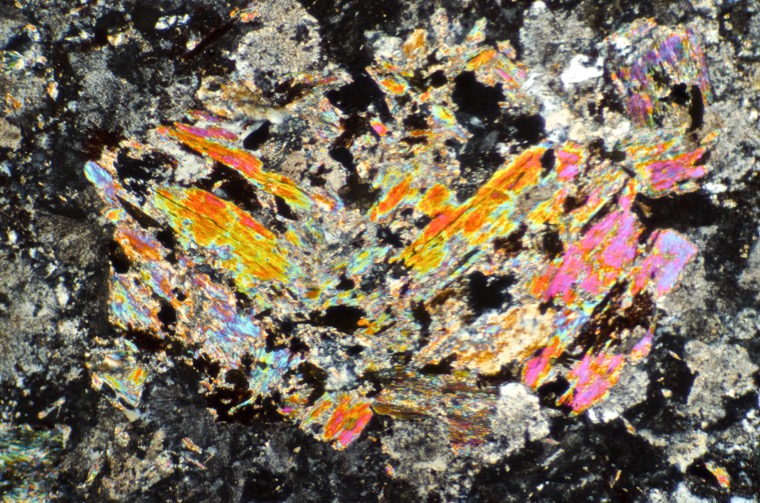
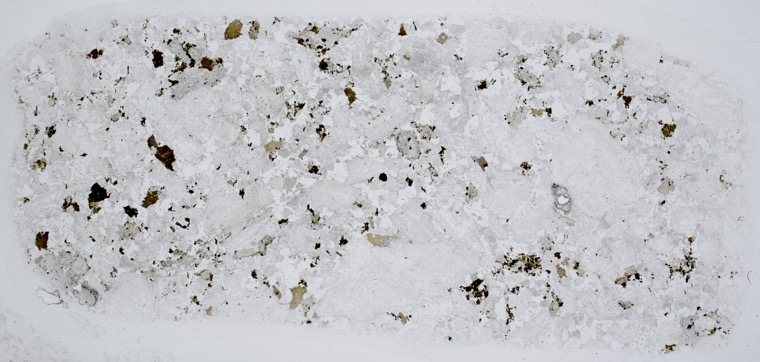
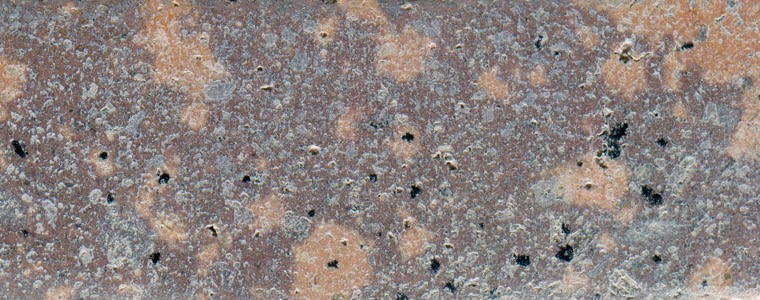
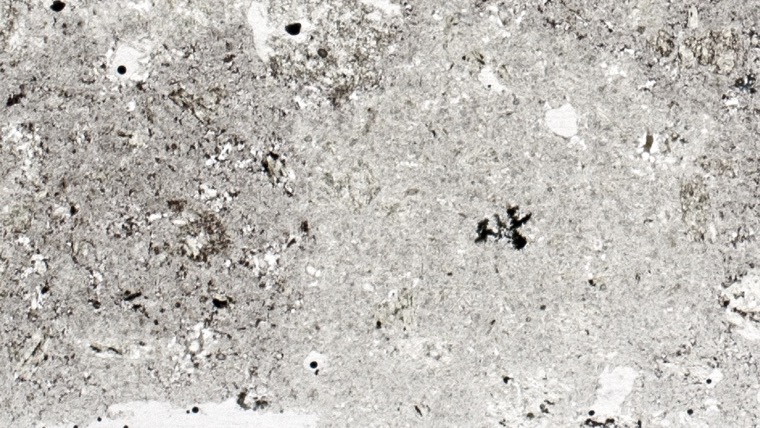
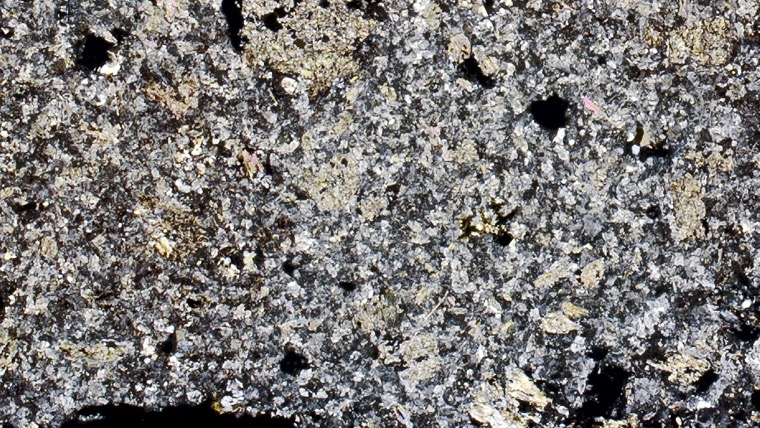
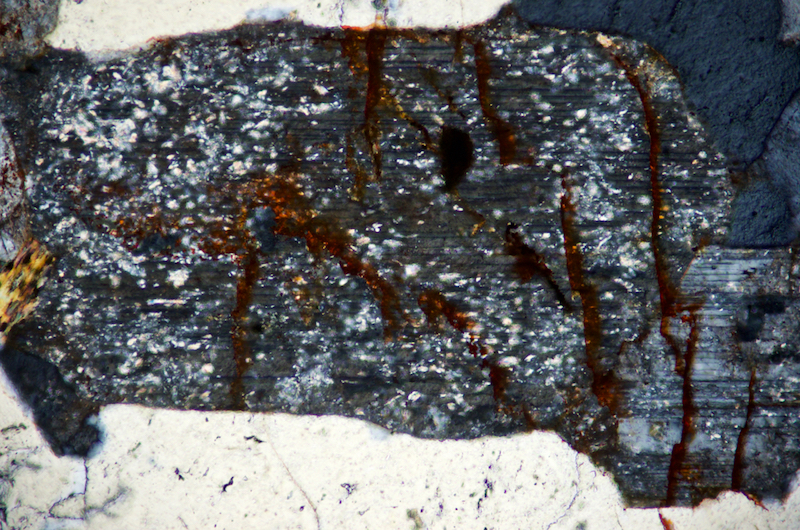
There’s an interesting section of rock here that is characterised by large-scale vertical fissuring and a blotchy appearance. Colin Scruton mentions that some of the rock in these parts features ‘areas of blotchy porphyry that have been described as volcanic xenoliths.’ In the hand specimen, it has lighter blotches on a reddish ground but the blotches themselves are not obviously xenolithic. We suppose them to be a product of the high degree of alteration that this rock has undergone – evidenced in the presence of tourmaline and abundant sericite. In thin section, the rock appears to be very low in quartz, most of it appearing in association with tourmaline, and it is without biotite and pyroxene. There are plagioclase phenocrysts, many of them appearing in clumps of broken crystals that maybe xenolithic. The small crystals of iron-titanium opaque minerals are widely scattered throughout the rock.
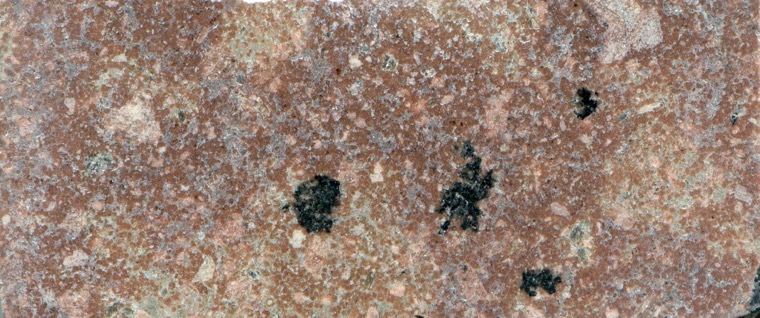
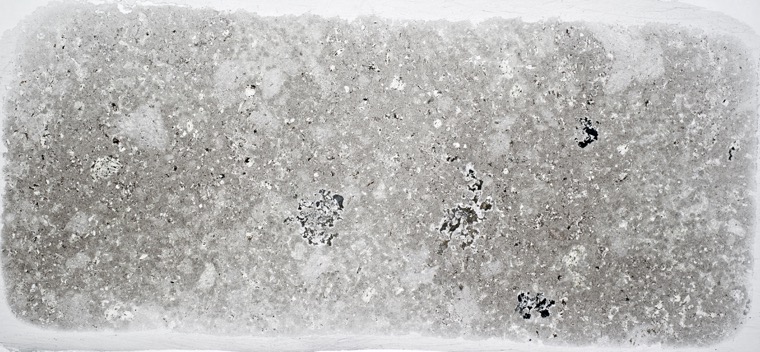
The sample measures 45mm across.
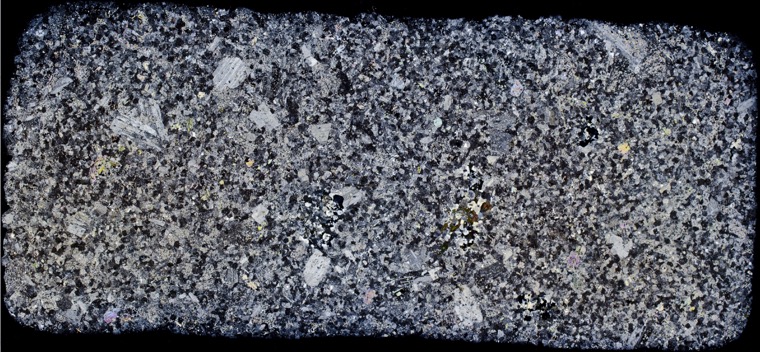


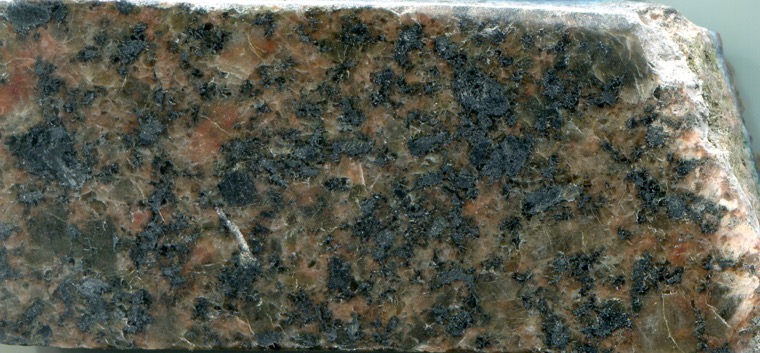
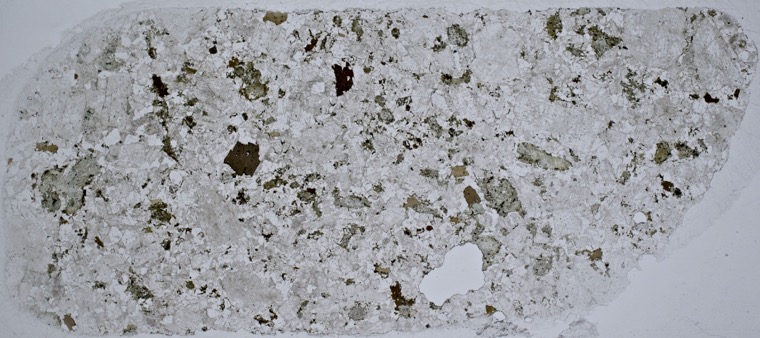
The closer we get to the first waterfall, the darker the rock appears, suggesting an increase in the proportion of mafic minerals like biotite and pyroxene. At location 3, above the cliff overlooking the pool, the rock appears to be very low in quartz (less than 20%) with roughly equal proportions of potassium feldspar and plagioclase and with a mafic content of about 14%. The accuracy of these figures is limited by our ‘pixel count’ method of determining mineral proportions, but that said, the rock here appears to be a syeno-granite.
The quantity of sericite in the rock bears witness to the high degree of hydrothermal alteration that occured in this area.
The sample measures 42mm across

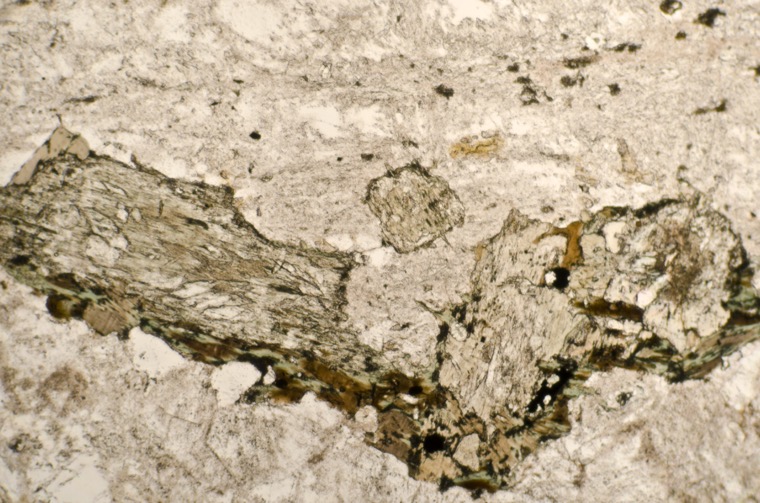
Thin section viewed in plane polarised light
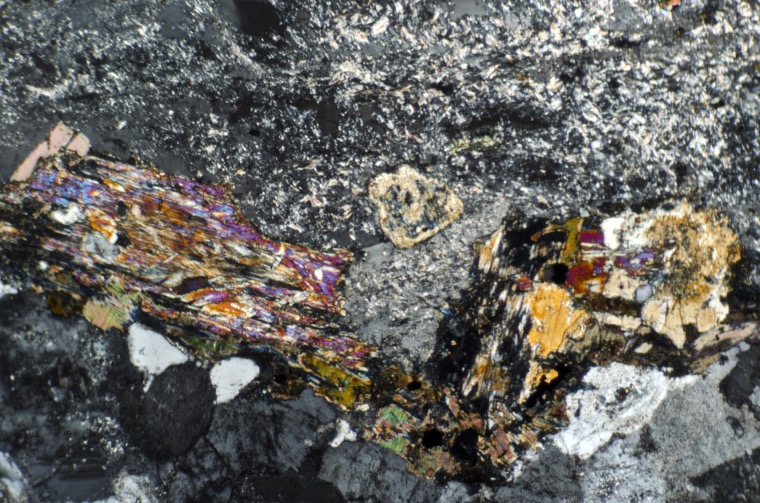

The lip of the lower waterfall is at NT 9273 2021 where the mafic content of the rock is approximately the same as the quartz content: around 20%. The plagioclase (or what was plagioclase and is now sericite) makes up only about 40% of the feldspar content so again, this appears to be a syeno-granite rock with a sub-equigranular texture with grains ranging between 1 and 5mm. The rock appears very dark on account of the plentiful mafic minerals that include, in order of quantity, biotite, clinopyroxene and orthopyroxene. More of the plagioclase has retained its polysynthetic twinning here, while the small amount of quartz in the rock appears in interstitial anhedral crystals and, in places, in a coarse micrographic texture with the potassium feldspar and perthite.
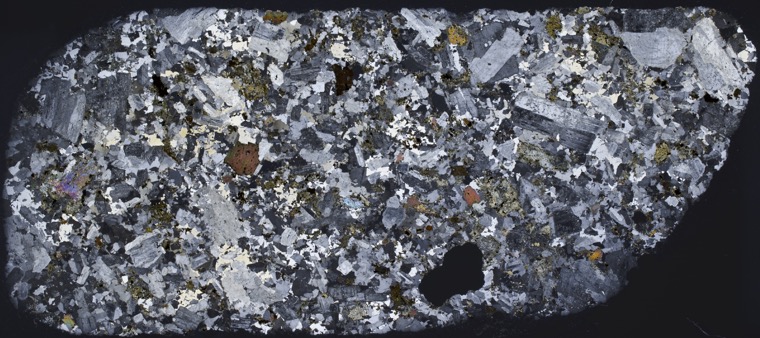
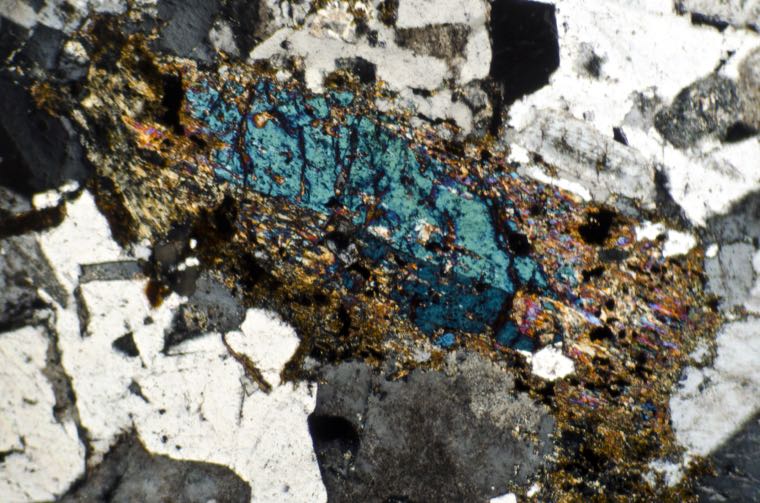
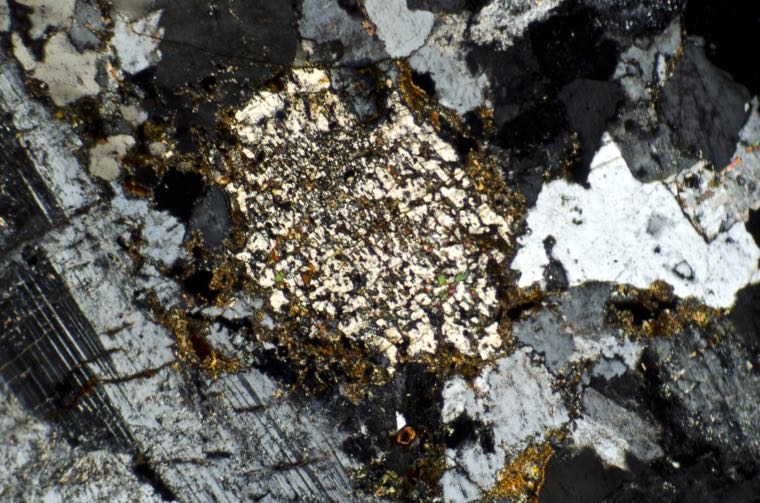
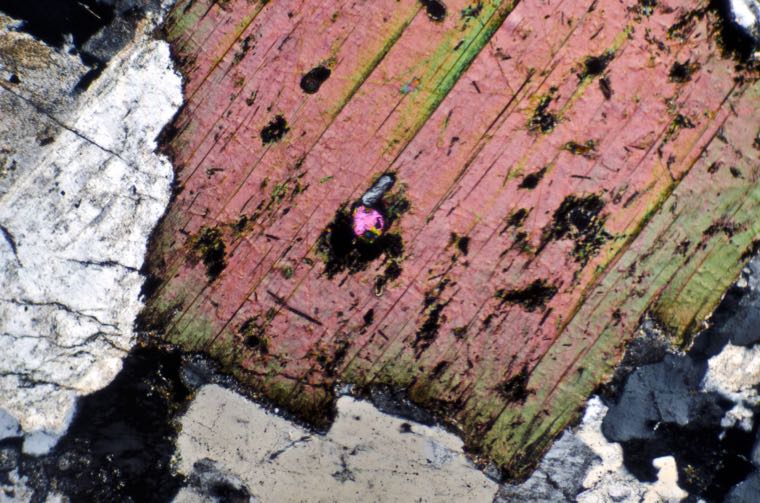
Thin section viewed with crossed polarising filters.
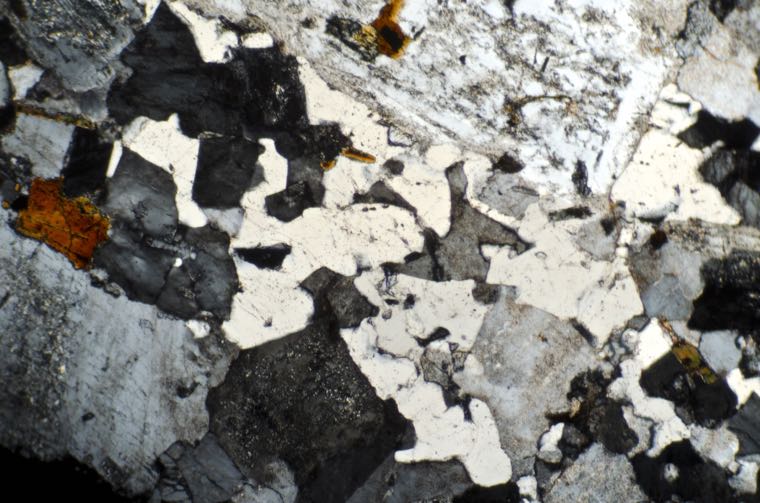
Section viewed with crossed polarising filters

A little further upstream at NT 9269 2019, the rock continues to be a sub-equigranular syeno-granite although it is slightly less mafic here and contains a little more quartz than at the lip of the waterfall. Here too, the grain sizes vary between 1 to 5mm with potassium feldspar sometimes forming a course micrographic texture with the quartz.
We search for the contact between the coarse-grained ‘Standrop’ type and the medium-grained that is said to be exposed here but we are unable to find it.
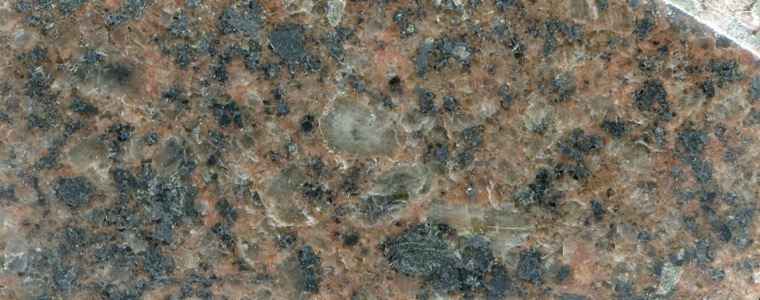
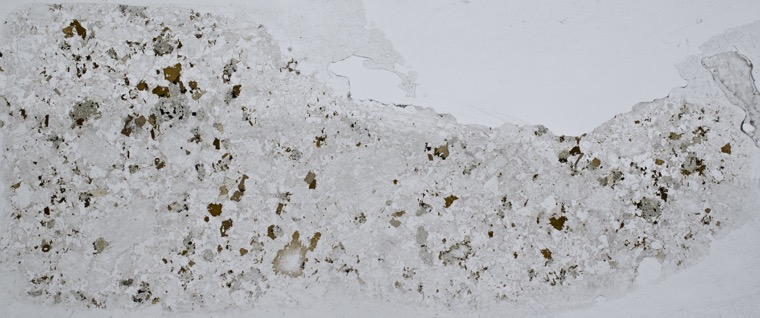
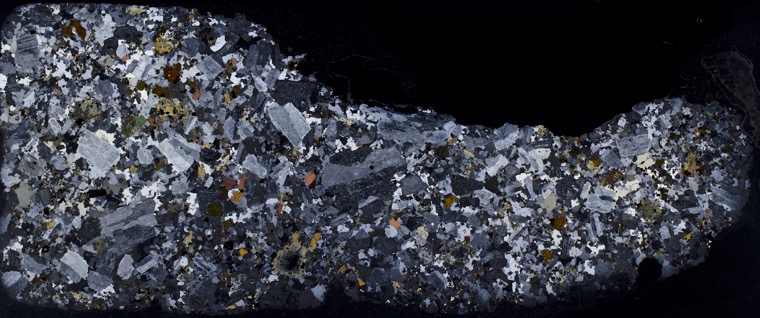
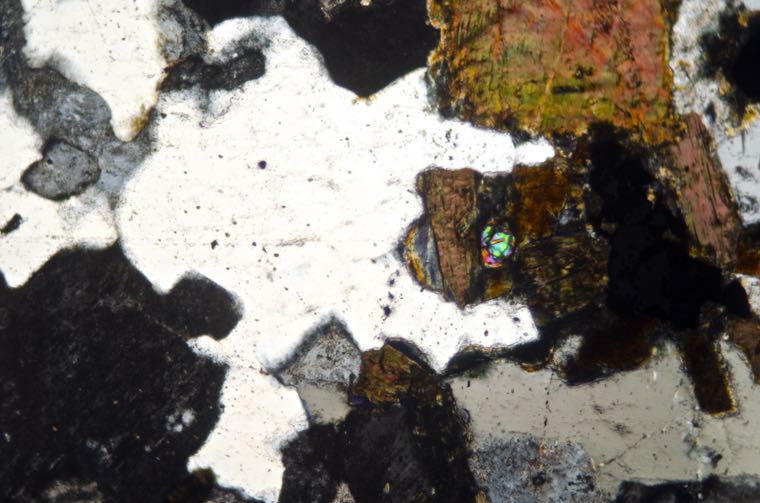

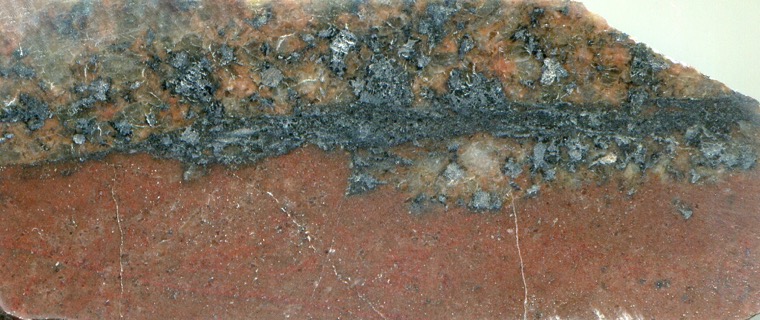
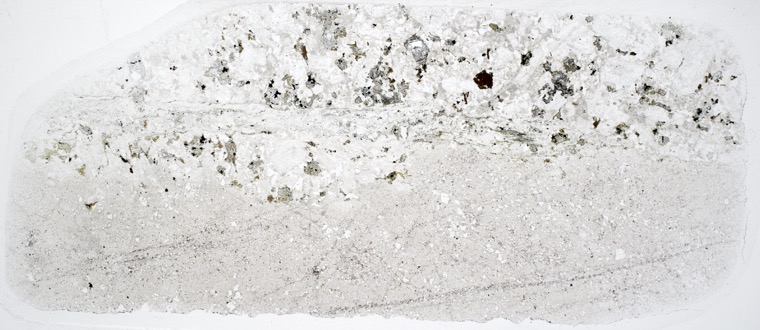
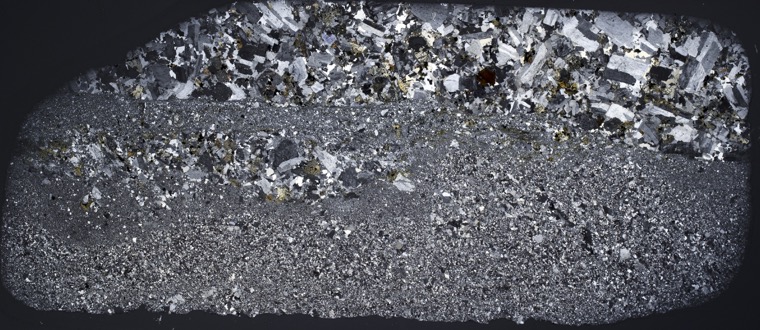
At NT 9268 2017 there is a vein of red, fine-grained felsic rock intruded into the syeno-granite and also more of the blotchy altered rock that we saw downstream at location 2 – although here it appears to have a higher quartz content. Here too we find tourmaline and muscovite as alteration products of the original rock. It’s interesting that we haven’t located the contact that is reported to exist between the granophyric and ‘Standrop’ types of cheviot granitic rock, nor seen a change in the general rock type.
Specimen 1
Specimen 2


Section viewed in plane polarised light
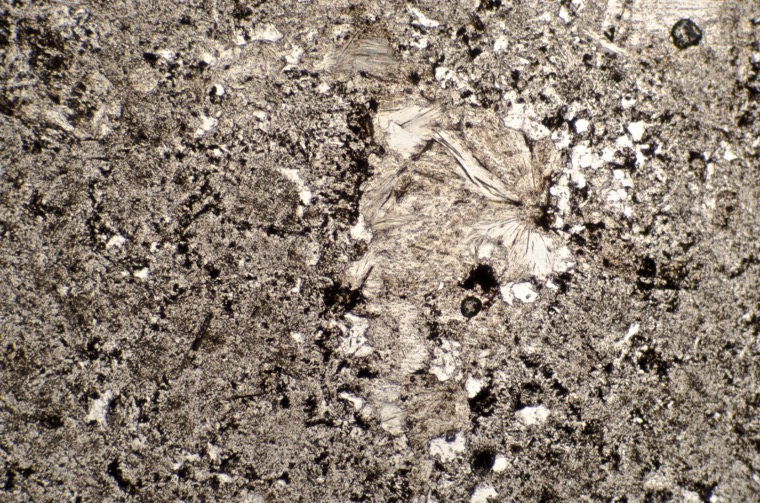
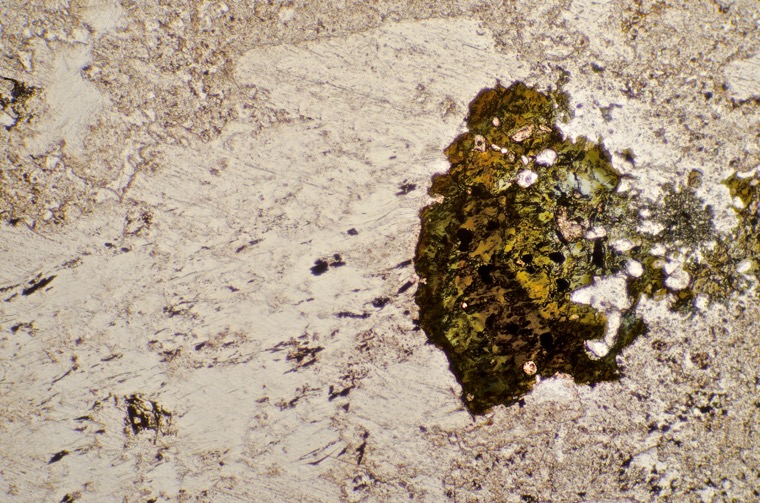
In the bank of the burn at the same location there is an area of rock that is very dark and fine grained. Thin sections show the darkest rock to be andesitic – quite probably a xenolith that had it’s origins in the roof of the magma chamber. The surrounding syeno-granite appears to be contaminated by the andesite whilst the andesite has undergone alteration to hornfels.

Specimen 3
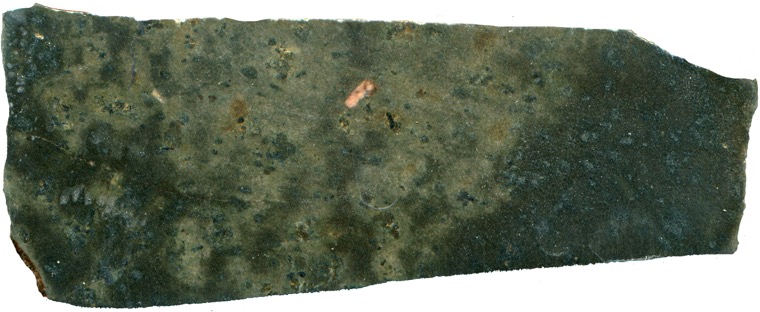

The section measures 48mm across,
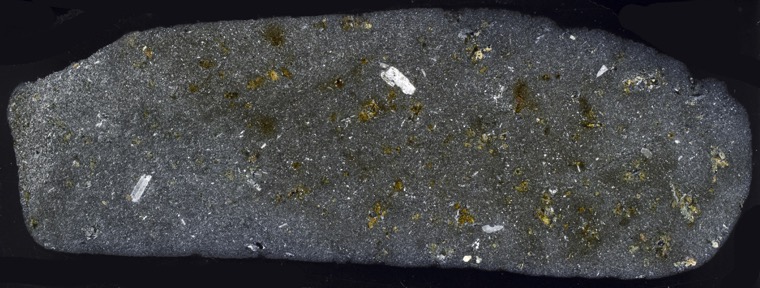
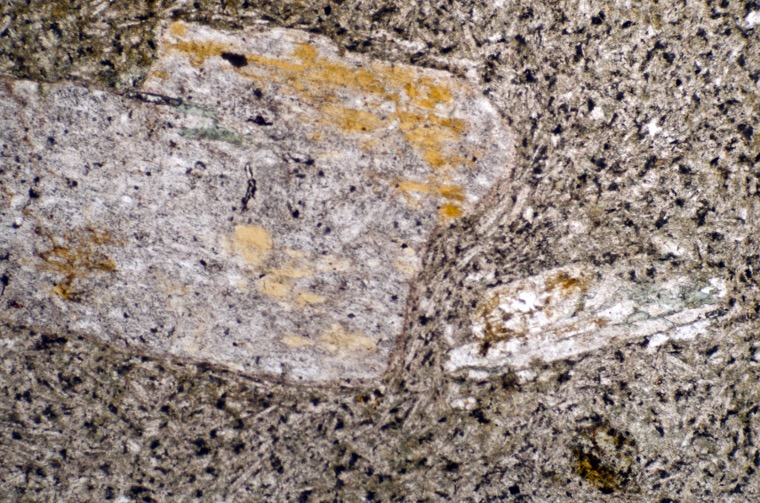

Specimen 4

The sample measures 45mm
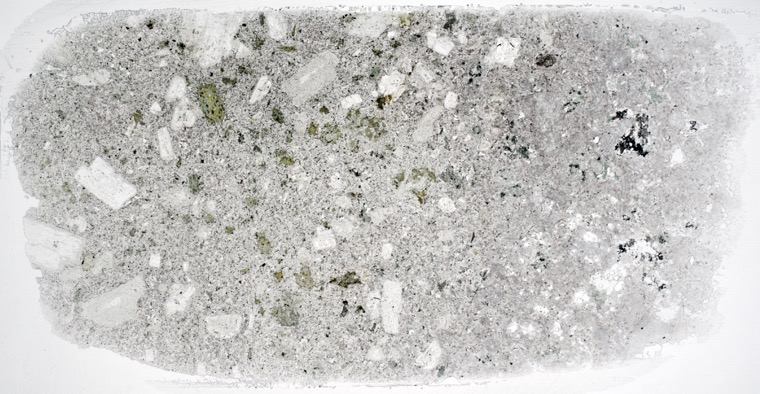


From the sheep stell near location 6, we head north over rough ground up to the exposed rock we see by the stream at NT926203. This location is on a fault marked on the online BGS map of the area and shown on our excursion map above.
The rock at this location is brecciated and cemented with quartz and haematite. The presence of silica veining with haematite in the fracture and fault zones of the Cheviots is associated with earth movements in the Variscan orogeny (also known as the Amorican or Hercynian).
This period of mountain building occurred over a period of about 100 million years with the greatest effect in these parts about 300 million years ago in late Carboniferous and early Permian times.
The Iapetus Ocean had closed in the latter stages of the preceding Caledonian orogeny as Avalonia and Baltica converged with Laurentia giving rise to the Laurasian continent. At the same time, Gondwana had continued to move northwards so that in the Late Paleozoic, Laurasia and Gondwana converged and formed the Pangean supercontinent.
These tectonic processes gave rise to the Variscan orogeny, the Variscan being the mountain belt which includes the mountains of Portugal and western Spain, Southwest Ireland, Cornwall, Devon, Pembrokeshire, the Gower Peninsula and the Vale of Glamorgan, all of which have fold axes that trend east to west suggesting a general north to south direction of collision.
In our region, old faults were reactivated, the Great Whin Sill and related dykes were intruded and, what is relevant here along the Harthope fault, silica-rich hydrothermal fluids circulated through fractures and faults in the lava, granite and dyke rocks causing relatively low-temperature oxidation of their iron-titanium oxides to haematite.
We find haematite in just about every Cheviot rock, but it is particularly abundant and massive here and in similar zones in the complex. The combined occurrence of breccia, quartz and haematite that we see here and at locations further up the Harthope Valley, is a consequence of, and evidence for, events in the Varsican.


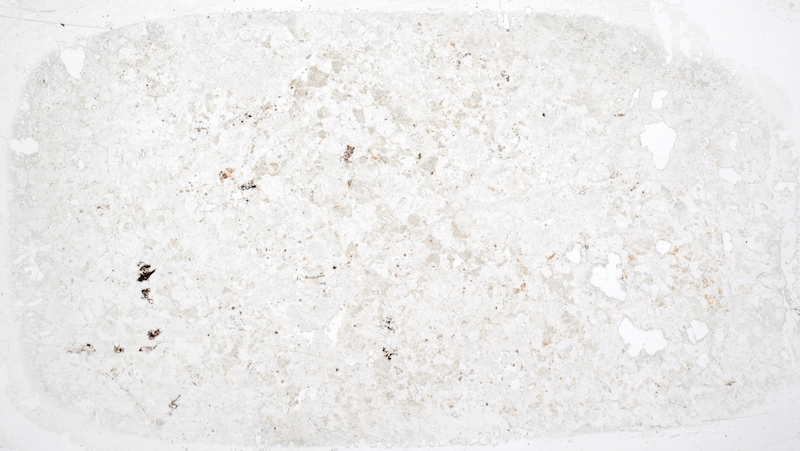

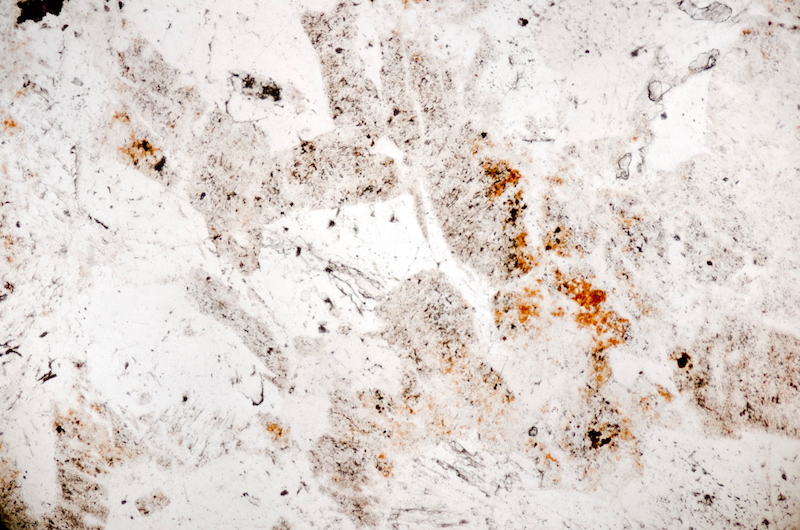
Section viewed in plane polarised light (FoV 3.2 x 2mm)
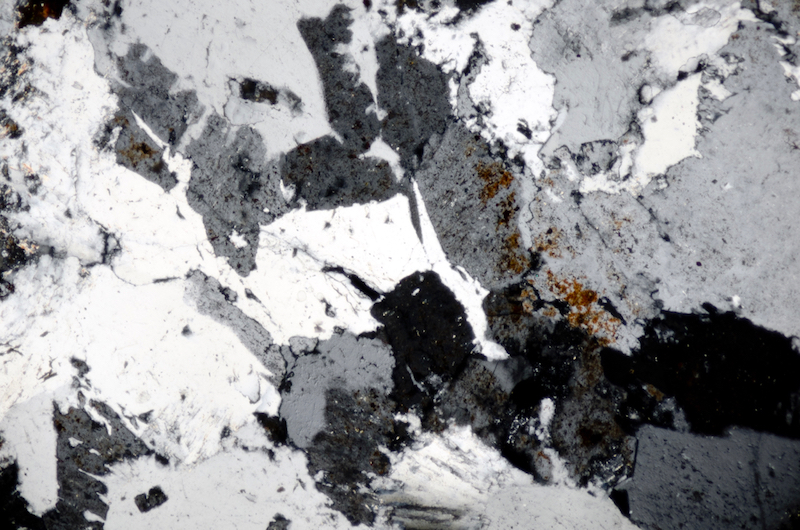
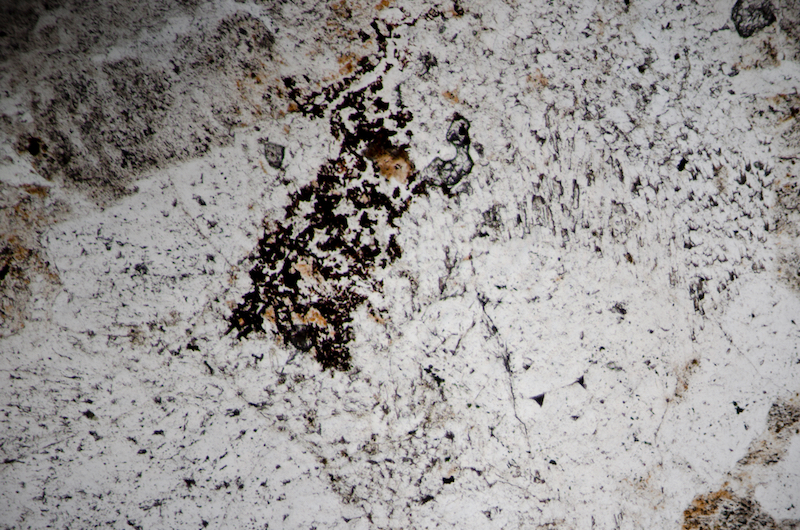
Section viewed in plane polarised light.


The rock at location 8, slightly downstream from the higher falls at Harthope Linn continues to approximate a syeno-granite but with less mafic content than the rock further downstream. We measured the mafic content at 11% and noted the absence of pyroxene but an increase in the amount of chlorite in the rock.
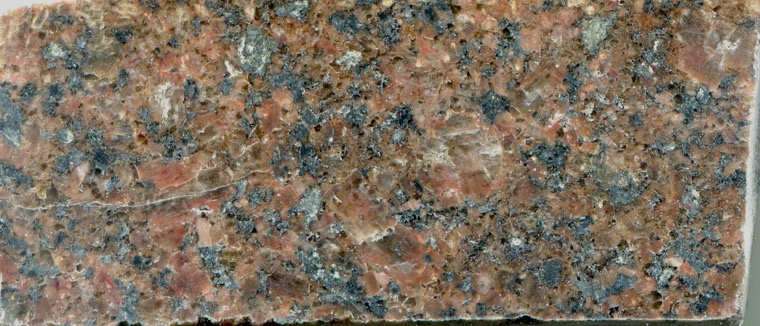

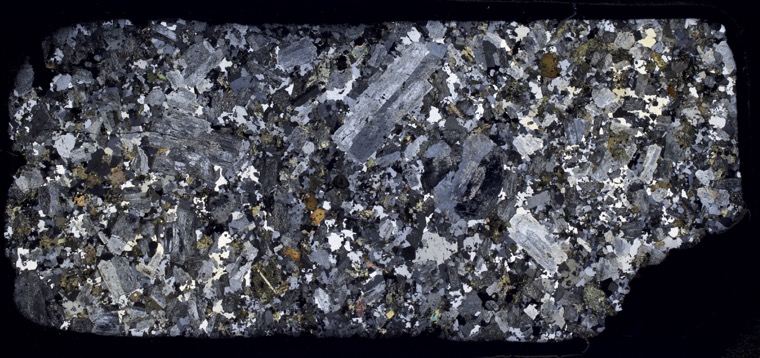
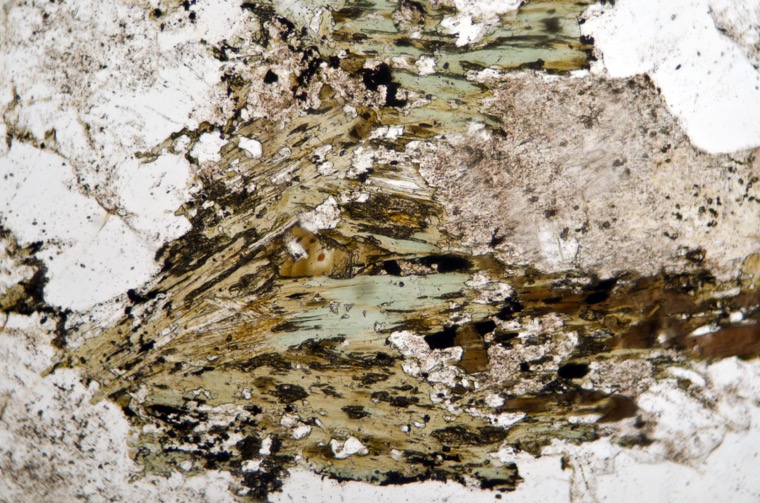

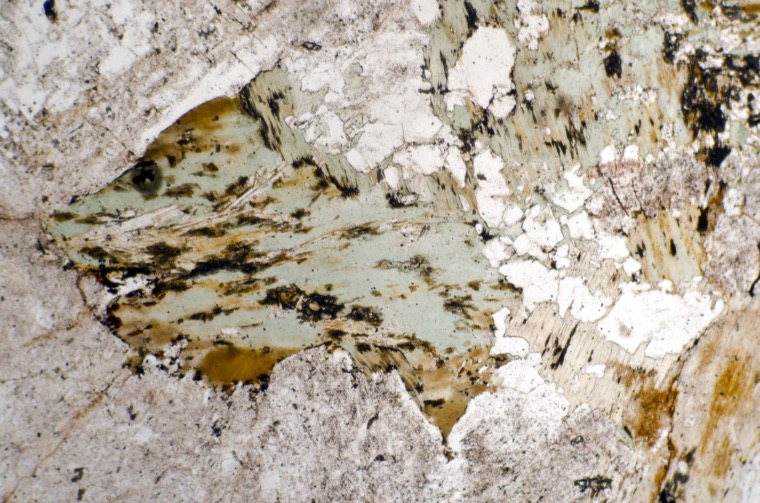
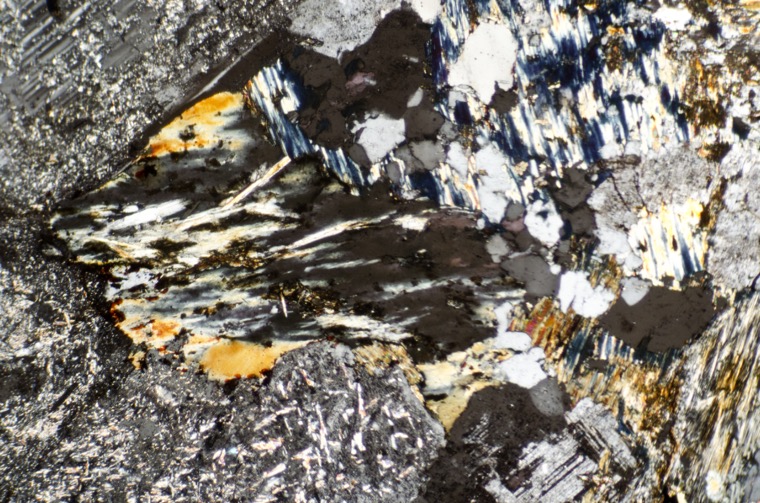

The rock exposed at the head of the stream above the upper waterfall is more of the syeno-granite. Presumably, any outcrops just north of this point would have been brecciated rock associated with the fault that continues here.
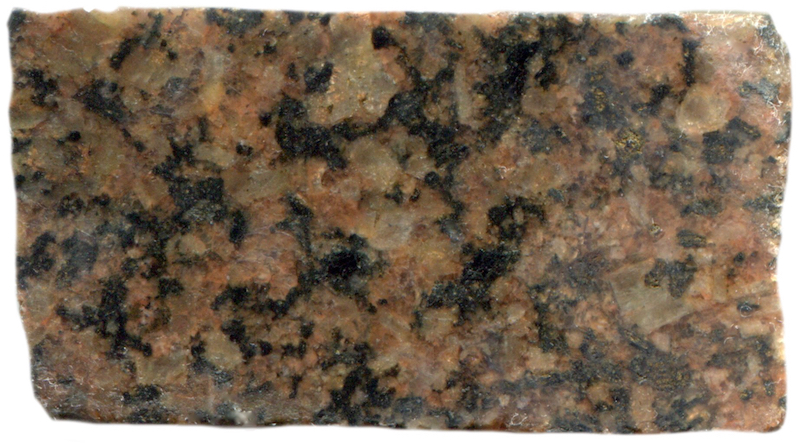
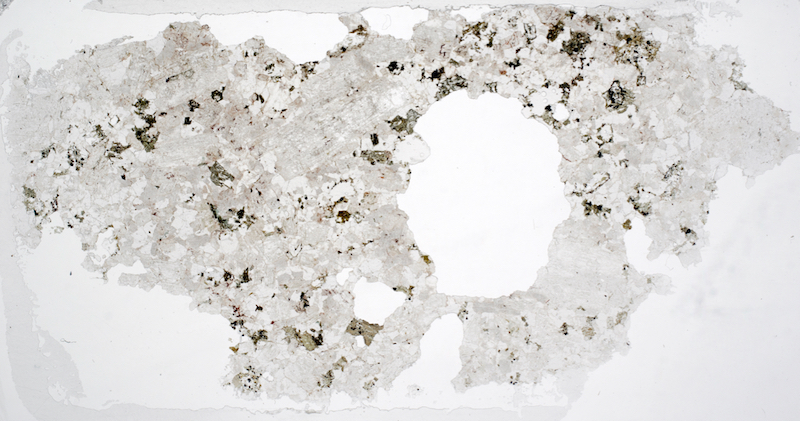
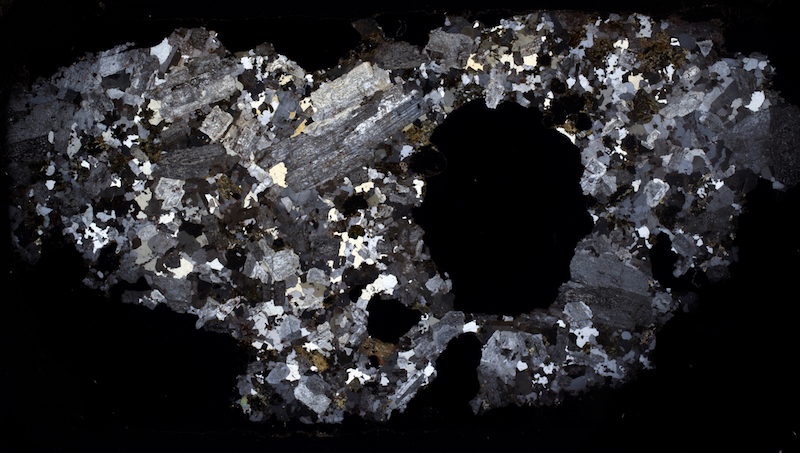

Section viewed in plane polarised light (FoV 2.5 x 1.7 mm)
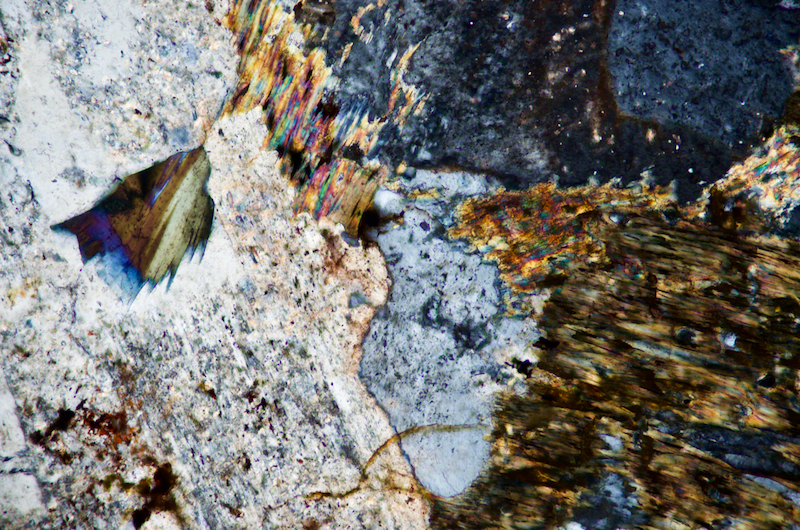
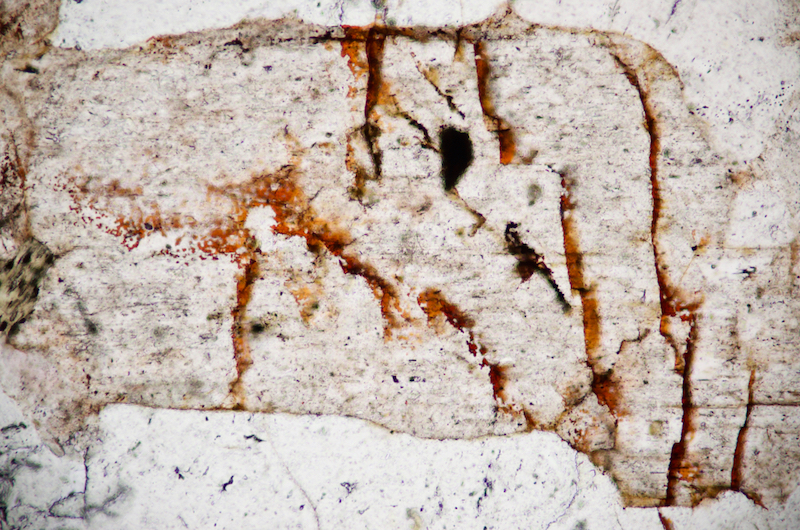
Section viewed in plane polarised light (FoV 1.3 x 0.8 mm)
Link to Part 2 – an excursion in the Upper Harthope Valley
References
N. M. Al-Hafdh 1985, The Alteration Petrology of the Cheviot Granite. Thesis submitted for PhD. at Newcastle University.
J. G. Mitchel, K. M. Storetvedt, D. A. Robson, M. C. Abranches, and P. R. Ineson, 1993, Evidence for Carboniferous thermochemical overprinting in the Cheviot Complex, Scottish Journal of Geology 29, (1), 55-68,
C. Scruton (ed,)1995, Northumbrian Rocks and Landscape: a field guide, Yorkshire Geological Society.
Geological Society of London, Plate Tectonics at:
https://www.geolsoc.org.uk/Plate-Tectonics/Chap4-Plate-Tectonics-of-the-UK/Variscan-Orogeny
British Geological Survey, Online geology map at:
http://mapapps.bgs.ac.uk/geologyofbritain/home.html