Dunion Hill excursion map showing sample locations and igneous rock types in the area


Dunion Hill is the remains of a Carboniferous volcano that became plugged by microgabbro. Quarrying has removed much of the upper part of the plug but has created the opportunity for us to get inside the oval structure and enjoy the scale of the intrusion. Good exposures lie all around.
The quarrying also removed a good deal of a large hill fort fort that once enclosed an area of between 6 and 6.5 hectares (60,000 – 65,000 m2) – a size comparable with the ‘oppida’, high status fortifiedlate Iron Age settlements, of the Tweed Basin. Apparently, the site started as a small fort on the summit and later expanded in stages.

Looking towards the north-east end and the way in to the quarry
The microgabbro at Dunion Hill is intermediate between the Jedburgh and Markle types i.e. it is a porphyritic olivine microgabbro with large (Markle) and small (Jedburgh) labradorite feldspar and olivine phenocrysts. The feldspar phenocrysts are more numerous than the olivine.
QAP diagram showing the quartz, alkali feldspar, plagioclase composition of microgabbro relative to other intrusive rocks


Prepared specimen viewed in reflected light. (Section measures 38mm across)
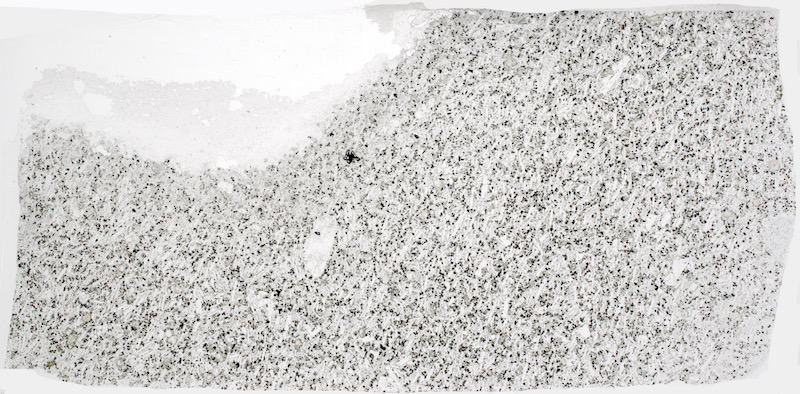
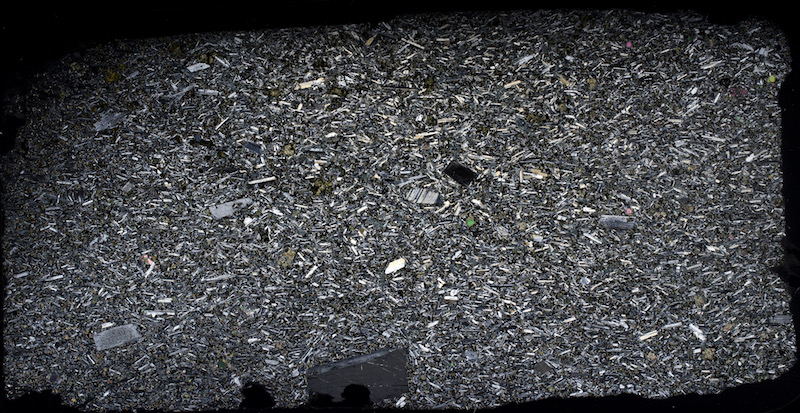
(Section measures 38mm across)

Alignment of the plagioclase phenocrysts, typical of the Jedburgh type of microgabbro, is easy to see.
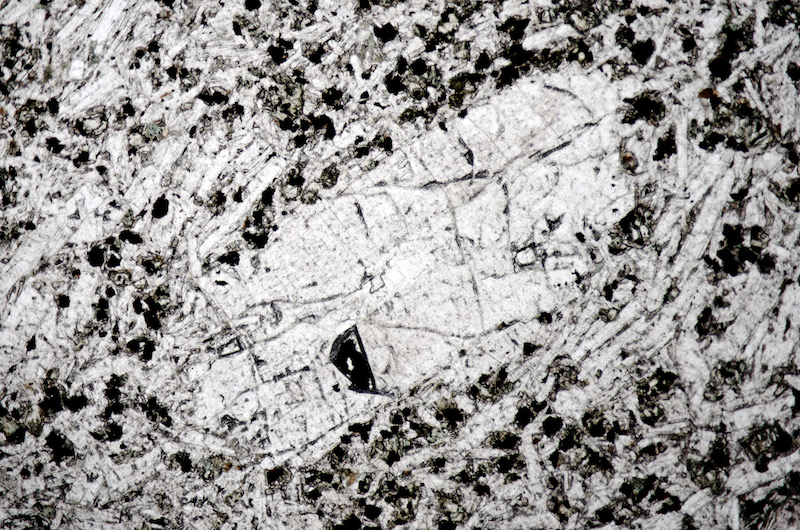
Section viewed in plane polarised light (FoV 4.6 x 3.0 mm)
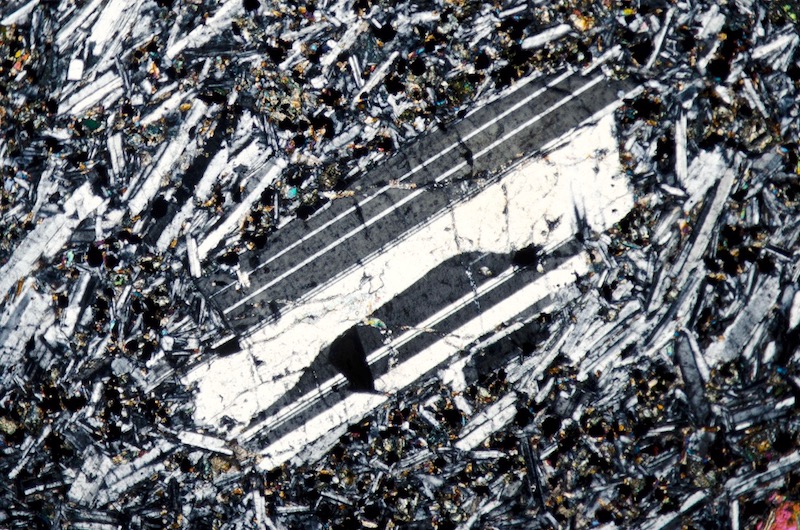
Small, high-birefringent crystals of olivine and pyroxene are visible (FoV 4.6 x 3.0 mm)


Sample viewed in reflected light.
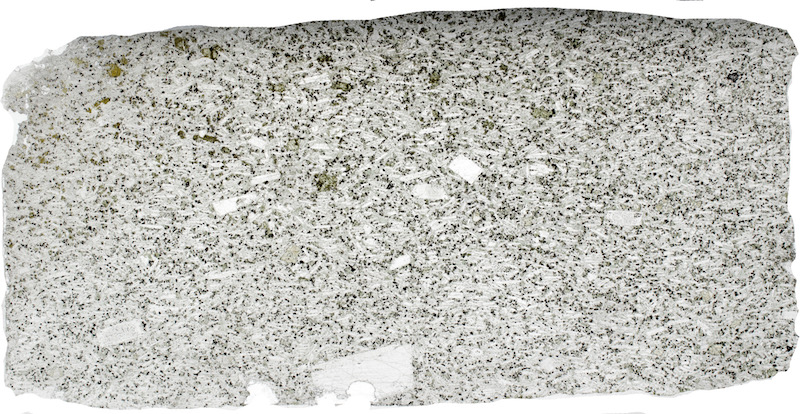
(Section measures 40mm across)
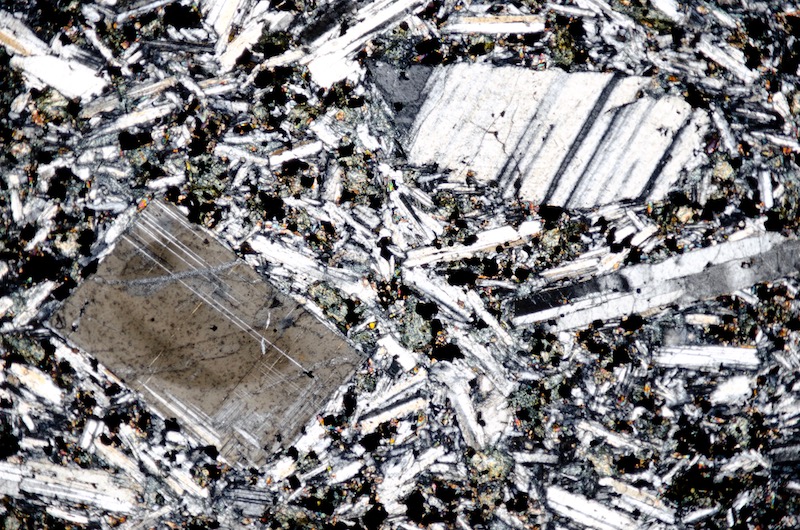
Section viewed with crossed polarising filters (FoV 4.6 x 3.0 mm)

Section viewed in plane polarised light. (FoV 1.2 x 0.8 mm)
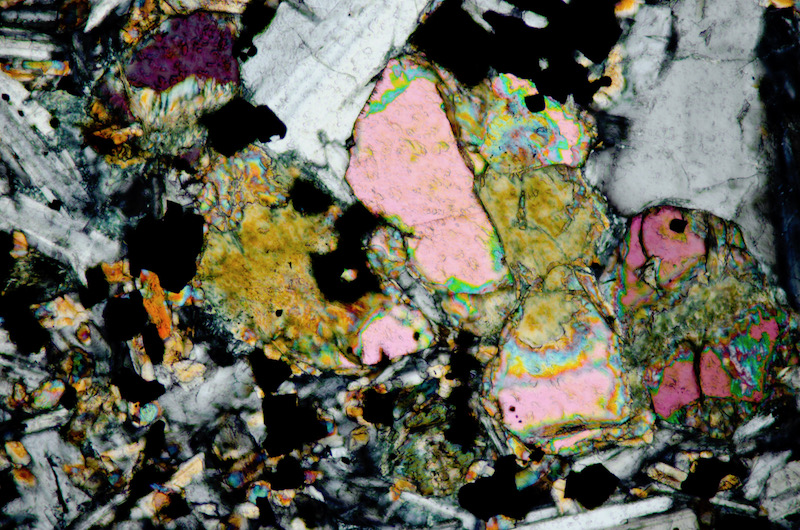
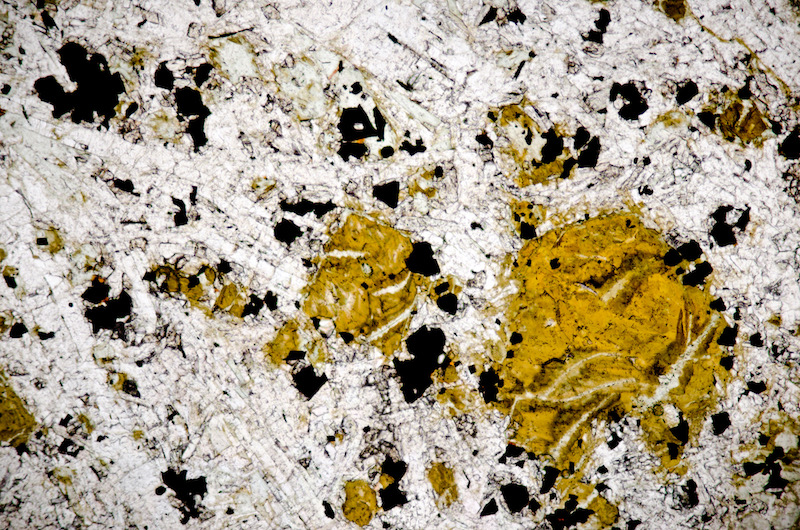
Section viewed in plane polarised light (FoV 2.3 x 1.5mm)

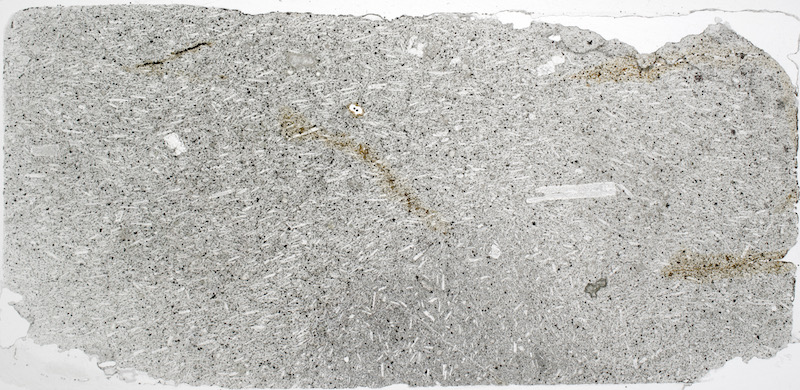
Thin section viewed in plane polarised light. (Section measures 40mm across)
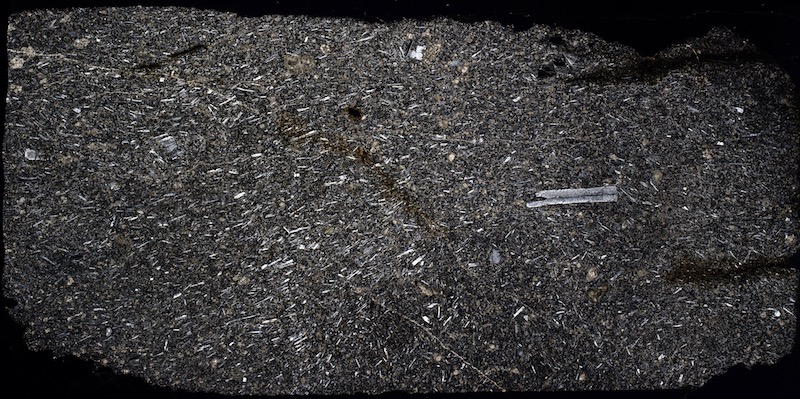
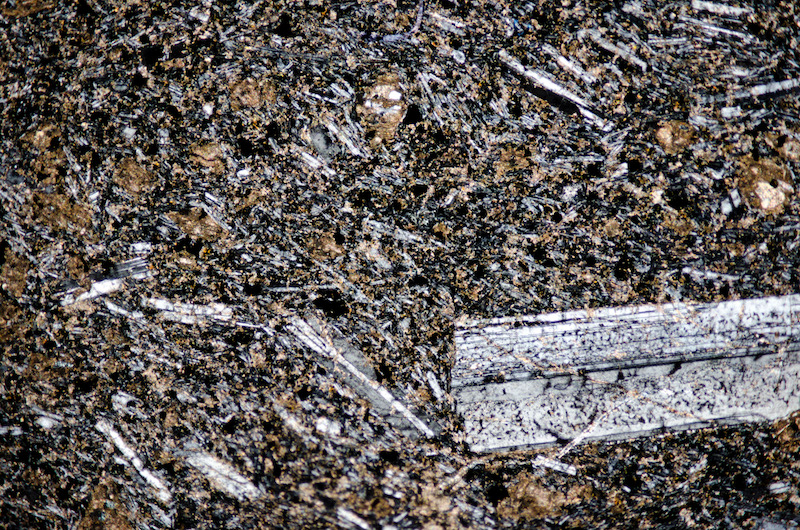
Section viewed with crossed polarising filters (FoV 4.6 x 3.0mm)

Section viewed in plane polarised light.(FoV 1.2 x 0.8 mm)
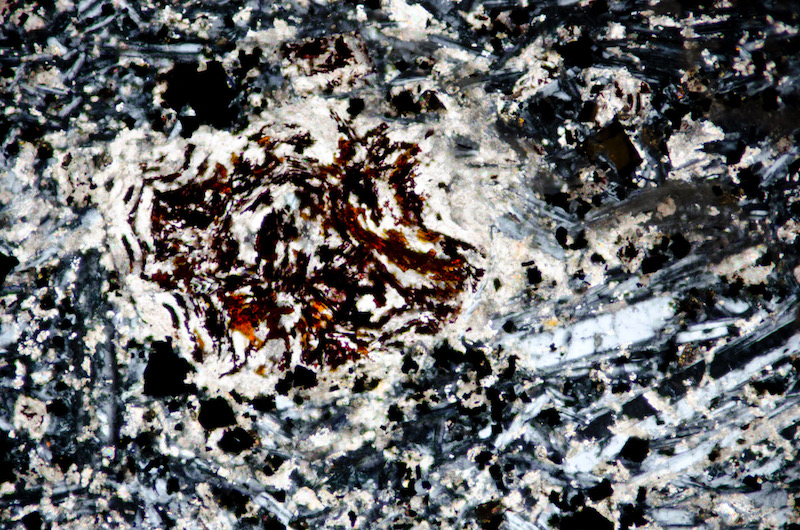


There are more vesicles in this sample taken from the edge of the intrusion.Prepared hand sample viewed in reflected light (sample measures 41mm across)
“Big Blast” in the Borders
Here’s a newspaper article we found in the archives of the Glasgow Herald that records the public viewing of a mighty explosion at the Dunion Hill quarry inJanuary 1938.

References
MacAdam A.D., Clarkson E.N.K., Stone, P. (editors) 1993 Scottish Borders geology: an excursion guide.Edinburgh, Scottish Academic Press.
Rideout, J S. 1987 Excavation of an Iron-Age fort at The Dunion, Roxburghshire‘, Proc Soc Antiq Scot, vol. 117, p 361-2.
Glasgow Herald 22 January 1938
https://news.google.com/newspapers?nid=GGgVawPscysC&dat=19380122&printsec=frontpage&hl=en
BGS online Geology of Britain http://mapapps.bgs.ac.uk/geologyofbritain/home.html